
Blog ·
Commercial Coffee Machine Water Filter — Scale Prevention & Flow Rate Guide
Polyphosphate vs TAC scale prevention for espresso machines, flow rate sizing (1.0-2.0 GPM), NSF 42/53 certification. OEM cartridge sourcing at 30-50% below Everpure pricing. Factory-direct guide.
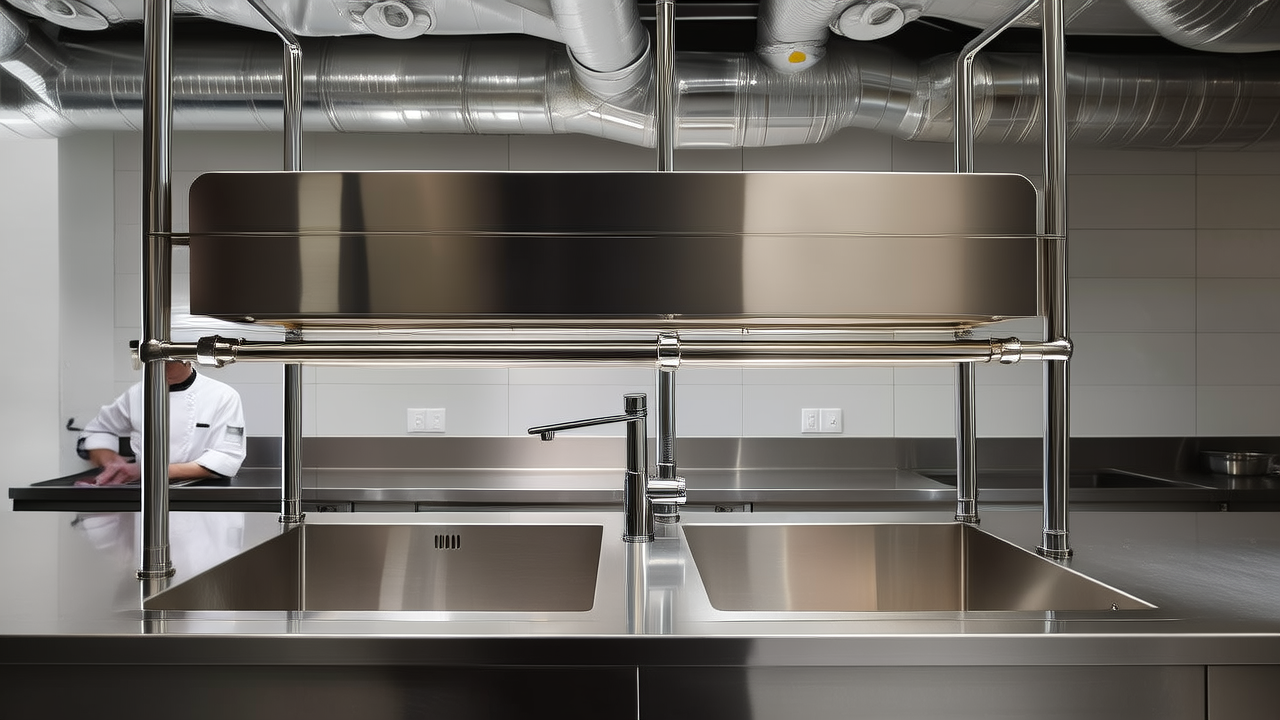
A commercial espresso machine running on unfiltered water is a $15,000-$40,000 time bomb. Calcium and magnesium dissolved in municipal water precipitate as scale inside boilers, heat exchangers, group heads, and steam wands at brew temperatures of 92-96°C — the exact conditions where scale formation accelerates exponentially. The filter cartridge between the water line and the machine is the single component that determines whether that equipment runs for 10 years or needs a $800 service call every 90 days.
This guide focuses on the two aspects of commercial coffee water filtration that most guides skip: scale prevention technology (polyphosphate vs TAC vs ion exchange — which actually works, and at what cost) and flow rate engineering (how to size a filter system so extraction pressure stays at 9 bars during peak service). We also cover OEM cartridge sourcing for operators and distributors who want Everpure-equivalent performance at 30-50% lower cost.
Why Scale Is the #1 Equipment Killer in Commercial Coffee
Scale formation is not gradual corrosion — it is an active chemical process that accelerates under the exact conditions commercial espresso machines create:
-
Temperature dependence: Calcium carbonate (CaCO3) solubility decreases as water temperature rises. At room temperature (20°C), water can hold approximately 53 mg/L of CaCO3 in solution. At 95°C (espresso brew temperature), solubility drops to approximately 13 mg/L. The difference — 40 mg/L — precipitates out as solid scale on every surface it contacts. This is a 4x increase in scale deposition rate compared to cold water applications.
-
Continuous thermal cycling: Unlike a residential water heater that heats once and holds, a commercial espresso boiler cycles between 85-96°C hundreds of times per day as shots are pulled and the heating element re-engages. Each thermal cycle deposits a fresh layer of scale.
-
Flow rate amplification: A busy cafe runs 25-35 gallons of water through the machine daily — 4,500-6,300 gallons over a 6-month filter interval. Every gallon deposits its mineral load inside the boiler and plumbing.
The cost of ignoring scale:
| Consequence | Typical Cost | Frequency (Unfiltered) |
|---|---|---|
| Descaling service call | $300-800 | Every 60-90 days |
| Heating element replacement | $400-1,200 | Every 12-18 months |
| Group head rebuild | $150-350 per group | Every 6-12 months |
| Flow restrictor replacement | $50-120 | Every 3-6 months |
| Warranty voided (all major brands) | Full machine cost ($15,000-40,000) | Immediate |
| Energy waste from insulated elements | 15-25% higher electricity | Ongoing |
Every major espresso machine manufacturer — La Marzocco, Nuova Simonelli, Victoria Arduino, Synesso, Slayer — requires water treatment and explicitly excludes scale damage from warranty coverage.
Scale Prevention Technologies Compared
Three technologies are used in commercial coffee water filtration to prevent scale. Each works differently, and the right choice depends on water hardness, cafe volume, and taste priorities:
1. Polyphosphate Dosing (Industry Standard)
Polyphosphate (typically sodium hexametaphosphate or food-grade siliphos) is the most widely used scale inhibitor filters in commercial coffee filtration. It works by sequestration — polyphosphate molecules bond to calcium and magnesium ions, preventing them from combining into scale crystals.
| Specification | Details |
|---|---|
| Dosing level | 2-5 ppm (parts per million) |
| Effective range | Up to 250 ppm calcium hardness |
| Temperature limit | Effective up to 95°C (degrades above 100°C) |
| NSF compliance | NSF/ANSI 42 (aesthetic) — polyphosphate is FDA GRAS |
| Effect on taste | None at standard dosing levels |
| Cost | Included in most cartridge designs (no added cost) |
| Used by | Everpure 4FC/MC2/H-300, most commercial coffee cartridges |
Advantages: Proven technology, low cost, built into standard carbon block cartridges, effective at espresso temperatures.
Limitations: Adds a chemical to the water (some specialty roasters object on principle). Loses effectiveness above 100°C (not suitable for steam boiler protection in some configurations). Does not reduce total hardness — only prevents precipitation.
2. TAC (Template Assisted Crystallization)
TAC media (marketed as “Filtersorb SP3” by Watch Water and similar products) converts dissolved calcium and magnesium into stable aragonite microcrystals — tiny crystals approximately 5-50 microns in diameter that remain suspended in water and pass through the system without adhering to surfaces.
| Specification | Details |
|---|---|
| Media type | Catalytic nucleation media (ceramic or polymer beads) |
| Effective range | Up to 300+ ppm calcium hardness |
| Temperature limit | Effective at all temperatures |
| NSF compliance | NSF/ANSI 61 (drinking water system components) |
| Effect on taste | None — no chemicals added, minerals remain in water |
| Media lifespan | 3-5 years (media is not consumed) |
| Cost | Higher initial ($200-600 for TAC vessel) but lower recurring |
Advantages: No chemicals added (pure physical process), preserves mineral content for optimal coffee extraction, long media lifespan, effective at steam temperatures above 100°C.
Limitations: Higher initial investment, requires pre-filtration (sediment and chlorine must be removed upstream), not yet integrated into standard cartridge form factors — typically requires a separate TAC vessel.
3. Ion Exchange Softening
Traditional water softening exchanges calcium and magnesium ions for sodium or potassium ions. This genuinely removes hardness minerals rather than inhibiting their scale-forming behavior.
| Specification | Details |
|---|---|
| Method | Cation exchange resin (Na+ or K+ form) |
| Effective range | Removes all hardness minerals |
| Regeneration | Requires salt (NaCl or KCl) regeneration |
| Effect on taste | Adds sodium — can affect espresso flavor profile |
| SCA concern | May push sodium above 30 ppm recommendation |
Advantages: Complete hardness removal, no residual scale risk.
Limitations: Adds sodium (metallic taste above 30 ppm, per SCA standards). Strips minerals that contribute to balanced extraction — excessively soft water (below 50 ppm TDS) produces sour, flat espresso. Requires salt regeneration (labor + cost). For most commercial coffee applications, polyphosphate or TAC is preferred over full softening.
Looking for a reliable water filter manufacturer?
Get free samples and a factory-direct quote. MOQ from 500 pcs.
Get a Free Quote →Flow Rate Engineering: Sizing Filters for Commercial Coffee
Undersized filters cause pressure drop — and in espresso, pressure is everything. The SCA standard requires 9 bars (130 PSI) at the group head for proper extraction. A filter system that restricts flow during peak demand reduces extraction pressure, causing under-extracted, sour shots.
Flow Rate Requirements by Equipment
| Equipment | Peak Flow | Minimum Filter Rating |
|---|---|---|
| Single-group espresso machine | 0.75-1.0 GPM | 1.0 GPM |
| Two-group espresso machine | 1.0-1.5 GPM | 1.5 GPM |
| Three-group espresso machine | 1.5-2.0 GPM | 2.0 GPM |
| Batch brewer (1 gallon) | 0.5-0.75 GPM | 0.75 GPM |
| Multi-machine (espresso + brewer + steamer) | 2.5-4.0 GPM | 3.0+ GPM |
How Carbon Block Micron Rating Affects Flow
The core tension in coffee filter design: finer filtration = better chlorine removal but lower flow rate. Here is the trade-off:
| Micron Rating | Chlorine Reduction | Max Flow Rate (standard cartridge) | Best For |
|---|---|---|---|
| 0.5 micron | 99%+ | 0.5-0.75 GPM | Single-group, low volume |
| 1.0 micron | 97-99% | 1.0-1.5 GPM | Most commercial coffee |
| 5.0 micron | 85-95% | 2.0-3.0 GPM | High-flow multi-machine |
For high-volume operations needing both fine filtration and high flow, the solution is parallel cartridge systems — two or three cartridges operating simultaneously divide the flow demand while maintaining filtration quality.
Pressure Drop Calculation
New cartridge pressure drop at rated flow: typically 5-15 PSI. As the carbon block loads with contaminants over its service life, pressure drop increases. Replace cartridges when pressure drop exceeds 25 PSI above baseline — at this point, flow restriction is affecting extraction quality.
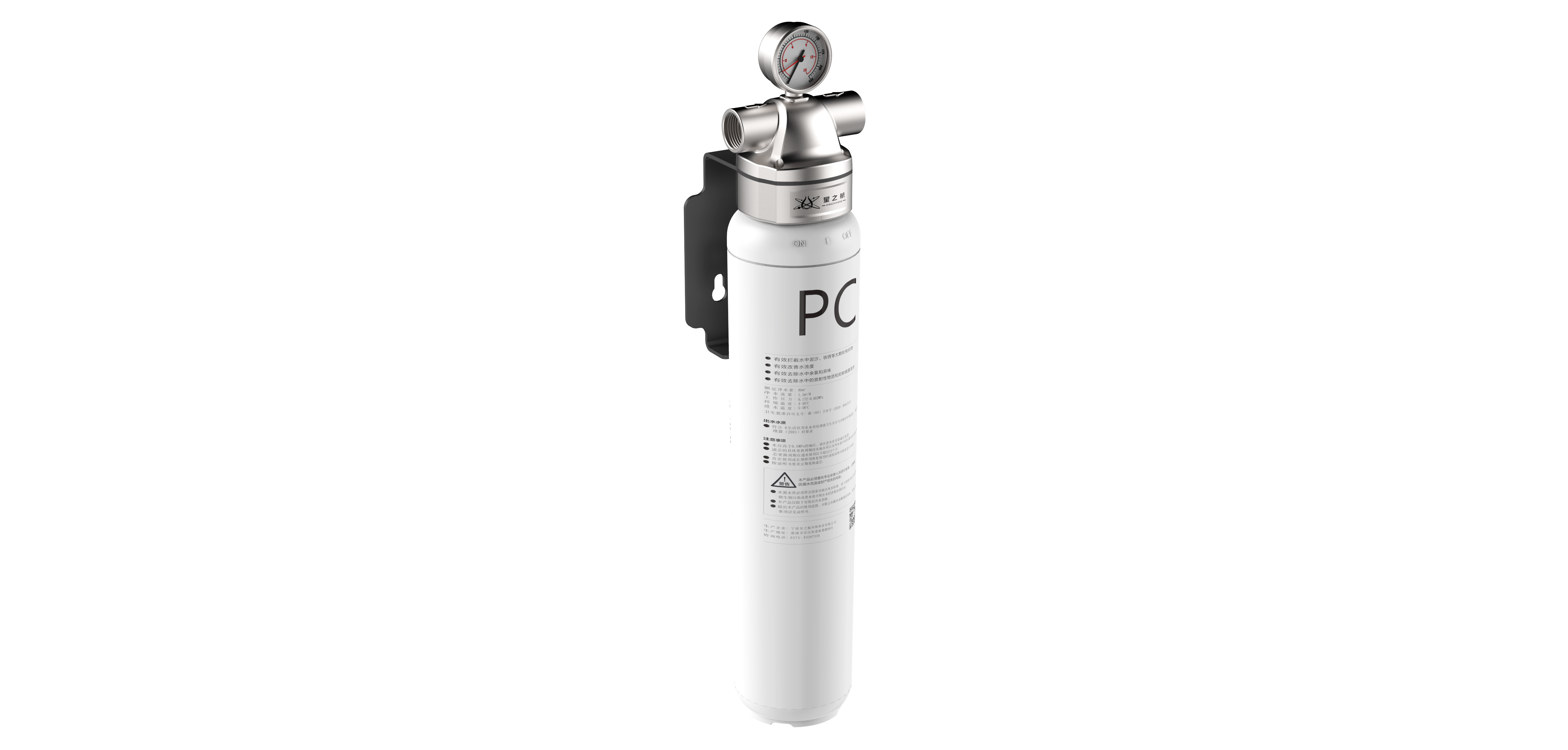
Install a pressure gauge on the filter outlet to monitor real-time pressure. The initial reading (with a new cartridge) is your baseline. A $15 gauge prevents $800 service calls.
The Right Filter Configuration for Commercial Coffee
Based on our manufacturing experience supplying cartridges to commercial coffee equipment distributors worldwide, here is the recommended filter stack:
| Stage | Function | Technology | Notes |
|---|---|---|---|
| Pre-filter | Sediment removal | 5-20 micron PP | Protects carbon block from premature clogging |
| Primary | Chlorine + taste + odor | 0.5-1.0 micron coconut-shell carbon block | The core filtration stage — must achieve 97%+ chlorine reduction |
| Scale inhibitor | Prevent calcium/magnesium precipitation | Polyphosphate (integrated) or TAC (separate vessel) | Critical for boiler and element protection |
| Optional: blending | Adjust TDS for extraction | Partial RO + mineral bypass | Only needed if source water exceeds 300 ppm TDS |
Coconut Shell vs Coal-Based Carbon: Why It Matters
Not all activated carbon is equal. For coffee water filtration, coconut-shell activated carbon is the correct specification:
| Property | Coconut Shell Carbon | Coal-Based Carbon |
|---|---|---|
| Pore structure | Microporous (high surface area) | Mixed macro/micro |
| Iodine number | 1,000-1,200 mg/g | 800-1,000 mg/g |
| Chlorine removal efficiency | Superior (more adsorption sites) | Good |
| Taste/odor removal | Excellent | Good |
| Hardness (abrasion resistance) | High | Moderate |
| pH effect | Neutral (minimal pH shift) | May increase pH |
| Cost | 20-30% more than coal | Baseline |
At XZH, all our commercial water filter cartridges use coconut-shell activated carbon exclusively. The higher iodine number (1,000+ mg/g) means more chlorine adsorption sites per gram of carbon, which translates to longer cartridge life at the same flow rate.
NSF Certification: What Commercial Coffee Operators Should Demand
NSF/ANSI 42 (Aesthetic Effects)
This is the essential certification for commercial coffee cartridges. NSF 42 verifies:
- Chlorine reduction (taste and odor) — target: 97%+ reduction
- Particulate reduction (nominal filtration rating)
- Material safety (no harmful leaching from filter components)
NSF/ANSI 53 (Health Effects)
NSF 53 verifies reduction of health-related contaminants:
- Lead (important for buildings with pre-1986 plumbing)
- Cysts (Cryptosporidium, Giardia)
- VOCs (volatile organic compounds)
For commercial coffee, NSF/ANSI 42 vs 53 certifications is recommended but not strictly necessary unless your local water utility advisory indicates lead or cyst concerns.
What to Ask OEM Suppliers
When sourcing OEM cartridges, demand these documents:
- NSF 42 test report (or WQA Gold Seal, which uses the same test protocol)
- Chlorine reduction data (percentage reduction at rated flow and capacity)
- Material extraction test (confirms filter materials do not leach contaminants)
- Carbon source certificate (coconut shell vs coal — insist on coconut shell)
OEM Cartridge Sourcing: Everpure-Compatible at 30-50% Lower Cost
For multi-location operators, foodservice distributors, and equipment dealers, the recurring cartridge cost is the largest line item in water filtration budgets. OEM-compatible cartridges offer identical filtration performance at significantly lower cost.
Which Systems Have OEM Alternatives?
| Brand/System | Connection Type | OEM Alternatives Available? |
|---|---|---|
| Everpure (4FC, MC2, H-300, 2FC, 4CB5) | Bayonet head (QC twist-lock) | Yes — widely cross-manufactured |
| 3M (HF series, SQC systems) | Proprietary SQC | No — 3M SQC is proprietary |
| BWT (Bestmax) | Bestmax head | Limited — some aftermarket options |
| Pentair/Everpure (new i-series) | Updated bayonet | Emerging — compatibility varies |
Why Everpure-Compatible OEM Cartridges Work
The Everpure bayonet head connection (also called “QC” or “twist-lock”) is not proprietary — it is an industry-standard mechanical interface that has been cross-manufactured by dozens of factories worldwide for over 20 years. The key dimensions are:
- Bayonet lug spacing and angle
- O-ring groove diameter and depth
- Cartridge body outer diameter
- Inlet/outlet port internal diameter
Any ISO 9001-certified manufacturer with experience producing Everpure-compatible cartridges matches these dimensions within specification. The internal filtration media — coconut-shell carbon block with polyphosphate — uses the same raw materials regardless of brand.
OEM Pricing Comparison
| Cartridge Model | Branded Price (USD) | OEM Price (USD) | Savings |
|---|---|---|---|
| Everpure 4FC equivalent | $85-120 | $35-55 | 45-55% |
| Everpure MC2 equivalent | $65-95 | $28-45 | 48-53% |
| Everpure H-300 equivalent | $75-110 | $32-50 | 45-55% |
| Everpure 2FC equivalent | $60-85 | $25-40 | 50-53% |
Prices are FOB China. Import duties, shipping, and distribution markup not included. Volume pricing available for orders of 500+ cartridges.
XZH OEM Manufacturing Capabilities
As an ISO 9001-certified manufacturer with 15+ years of experience producing commercial water filter cartridges, Ningbo XZH Environmental Technology offers:
- Everpure-compatible bayonet head cartridges in all standard capacities (1,500-9,000 gallons)
- Coconut-shell activated carbon block with iodine number 1,000+ mg/g
- Integrated polyphosphate scale inhibitor at calibrated 2-5 ppm dosing
- Private label packaging with your brand, logo, and specifications
- MOQ from 500 cartridges per model — accessible for regional distributors
- NSF component-certified materials with full documentation package
Browse our commercial coffee machine filter range or request OEM pricing for Everpure-compatible cartridges.
Filter Replacement Schedule for Commercial Coffee
The correct replacement interval depends on cartridge capacity and daily water consumption — not just calendar time:
| Daily Volume | 2,500 gal Cartridge | 6,000 gal Cartridge | 9,000 gal Cartridge |
|---|---|---|---|
| 100 cups/day (~7 gal) | 12 months* | 24+ months* | 36+ months* |
| 200 cups/day (~14 gal) | 6 months | 14 months | 21 months |
| 300 cups/day (~21 gal) | 4 months | 9.5 months | 14 months |
| 500 cups/day (~35 gal) | 2.5 months | 5.7 months | 8.6 months |
Maximum recommended interval is 12 months regardless of remaining capacity — carbon block effectiveness degrades with time even at low flow, and bacterial growth risk increases after 12 months.
Best practice: Install a mechanical or electronic flow meter on the filter inlet. Track cumulative gallons and replace at rated capacity or 12 months, whichever comes first. A $30 flow meter turns filter changes from guesswork into data.
Key Takeaway
Commercial coffee water filtration is an engineering problem, not a purchasing afterthought. The right filter system — properly sized for flow rate, with appropriate scale prevention technology, and replaced on a data-driven schedule — protects equipment worth $15,000-$40,000 and ensures consistent cup quality across every shot.
For operators and distributors seeking Everpure-compatible OEM cartridges with coconut-shell carbon, integrated polyphosphate scale inhibitor, and NSF 42-level performance at 30-50% below branded pricing, contact XZH for a quote. MOQ from 500 cartridges, private label available.
Related Guides
- Commercial Water Filtration Solutions — Full product catalog for coffee, ice machine, and foodservice applications.
- Coffee Machine Water Filter: Types & Replacement Guide — Overview of filter types and replacement schedules.
- Coffee Machine Filters Manufacturers: OEM Sourcing Guide — How to evaluate and source coffee filter cartridges from Chinese manufacturers.
- Everpure Compatible Cartridges — Drop-in replacements for Everpure 4FC, MC2, H-300, and more.
- Coconut Shell Activated Carbon Water Filter Guide — Why coconut shell carbon outperforms coal-based carbon in water filtration.
Frequently Asked Questions
- What type of scale prevention does a commercial coffee machine water filter need?
- Commercial coffee machines need either polyphosphate dosing or TAC (Template Assisted Crystallization) media for scale prevention. Polyphosphate is the industry standard — it sequesters calcium and magnesium ions, preventing them from precipitating as scale at brew temperatures (92-96 degrees C). Polyphosphate is included in most Everpure and 3M coffee cartridges at 2-5 ppm dosing levels. TAC is a newer, chemical-free alternative that converts dissolved minerals into stable microscopic crystals that pass through the system without adhering to surfaces. TAC does not add chemicals to the water, making it preferred by specialty coffee roasters who want zero additives affecting cup flavor.
- What flow rate should a commercial coffee machine water filter support?
- The filter must support the peak flow demand of the connected equipment. For a single-group espresso machine, minimum 1.0 GPM (3.8 LPM). For a two-group machine, 1.5 GPM (5.7 LPM). For a three-group machine or multiple machines on one filter, 2.0+ GPM (7.6+ LPM). Undersized filters cause pressure drop that affects extraction pressure (espresso needs 9 bars at the group head) and flow consistency. Always size for peak demand plus a 20% safety margin, not average consumption.
- How does NSF 42 vs NSF 53 certification matter for coffee machine water filters?
- NSF 42 certifies aesthetic contaminant reduction — chlorine taste, odor, and particulates. NSF 53 certifies health contaminant reduction — lead, cysts (Cryptosporidium, Giardia), VOCs, and specific chemicals. For commercial coffee applications, NSF 42 is the essential certification because chlorine removal is the primary requirement. NSF 53 is a bonus but not strictly necessary unless local water quality has documented lead or cyst issues. When sourcing OEM cartridges, NSF 42 certification with documented chlorine reduction above 97% should be the minimum specification.
- Can I use OEM-compatible cartridges instead of Everpure originals for commercial coffee?
- Yes, for Everpure bayonet-head systems (4FC, MC2, H-300, 2FC, 4CB5). The bayonet interface is an industry-standard connection that is cross-manufactured by ISO 9001-certified factories using identical coconut-shell activated carbon block media and NSF 42-certified materials. OEM-compatible cartridges cost 30-50% less than branded originals at equivalent filtration performance. However, 3M SQC (Sanitary Quick Change) systems use a proprietary connection that does not have aftermarket alternatives — you must use 3M originals for SQC systems.
- How often should commercial coffee machine water filters be replaced?
- Replace at rated gallon capacity or every 6 months, whichever comes first. Standard capacity cartridges (2,500 gallons) suit cafes serving 150-200 cups per day. High-volume locations serving 400+ cups daily should use high-capacity cartridges (6,000-9,000 gallons) or twin-cartridge parallel systems to avoid mid-interval exhaustion. Install a mechanical or electronic flow meter on the filter inlet to track actual consumption — calendar-based replacement alone risks either premature changes (wasted cartridge life) or overdue changes (scale damage to the machine).
- What is the cost difference between branded and OEM coffee machine water filter cartridges?
- OEM-compatible cartridges from ISO 9001-certified manufacturers typically cost 30-50% less than Everpure or 3M branded originals. For a single cafe changing two cartridges per year, savings are $60-120 annually. For a 50-location coffee chain or a roaster supporting 200 wholesale accounts, annual savings reach $15,000-60,000 — enough to fund a complete private-label cartridge program with custom branding. Quality is equivalent when sourcing from factories with NSF component certifications, coconut-shell carbon media, and documented chlorine reduction testing.
Looking for OEM Water Filter Cartridges?
Get a factory-direct quote from Ningbo XZH — 15+ years OEM experience, 50+ export markets, MOQ from 500 pcs.
Get a Free Quote →Get Our Full Product Catalog
100+ SKUs with specs, MOQ, and factory-direct wholesale pricing — everything covered in this article and more.