Blog ·
Water Filter Manufacturer China: OEM Supplier Guide 2026
Source water filters factory-direct from China: filter type comparison, NSF/ANSI & EU certifications, OEM private label options, and how to place your first order.
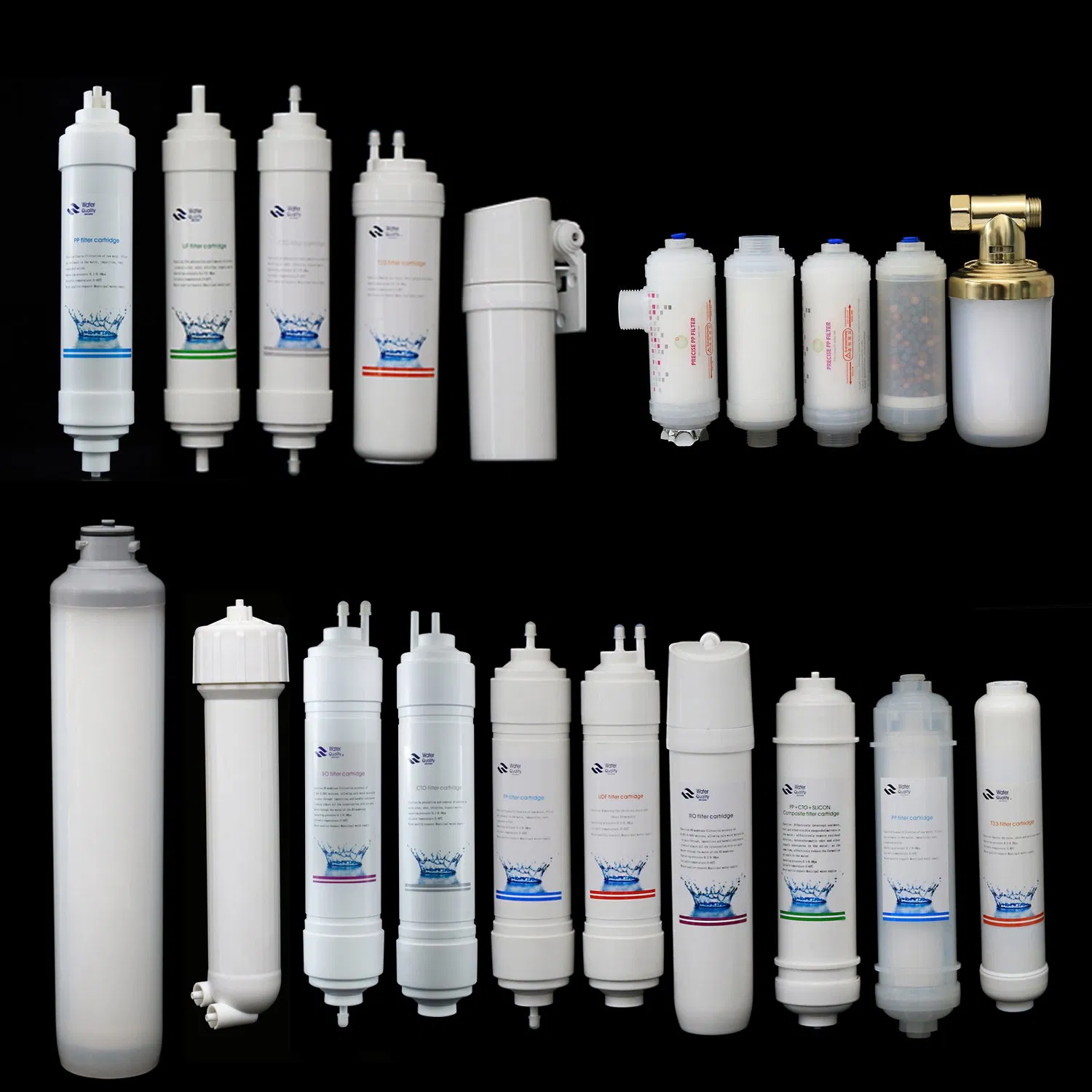
Factory-direct sourcing for water filtration products has shifted dramatically over the past decade. Buyers who once relied on regional distributors now negotiate directly with ISO-certified Chinese manufacturers — cutting per-unit costs by 30–50%, gaining full control over certifications and specifications, and building private-label programs that lock in customer loyalty.
This guide gives procurement managers, OEM brand owners, and water treatment distributors a practical framework for evaluating Chinese water filter manufacturers: which filter types to source, what certifications actually matter, what OEM customization options exist, and how a production order moves from sample approval to your warehouse.
Why Source Water Filters Factory-Direct from China?
The global water filter cartridge market is overwhelmingly manufactured in China. Ningbo, Quanzhou, and Shenzhen host hundreds of factories producing everything from basic PP sediment cartridges to certified RO membrane systems. Sourcing direct from these facilities — rather than through a trading company or regional distributor — delivers three structural advantages.
Price. Eliminating two to three layers of margin typically saves 30–50% per unit at equivalent quality. On a 10,000-piece annual program, that difference funds your entire private-label packaging and branding investment.
Specification control. Working directly with a manufacturer’s engineering team means you specify the exact carbon media grade, water filter micron ratings, flow rate, and housing material — not accept a catalog SKU. For buyers serving regulated markets, this is the only way to guarantee your product hits NSF or EU compliance thresholds.
Certification visibility. Reputable Chinese OEM manufacturers maintain ISO 9001 quality systems, in-house test labs, and third-party certifications (NSF, CE, WRAS). When you buy through a distributor, those certificates belong to the distributor — not you. Direct sourcing means the NSF listing can be in your brand name, which is essential for retail shelf placement and foodservice procurement contracts.
Water Filter Types: Comparison Table
Choosing the right filter type for your application starts with understanding what each technology removes and at what cost. The table below covers the four core cartridge types used in residential, commercial, and foodservice applications.
| Filter Type | Filtration Level | Flow Rate | Key Certifications | Typical MOQ | Unit Price Range (FOB) |
|---|---|---|---|---|---|
| Sediment (PP Melt-blown) | 1–50 micron | 2–4 GPM | ISO 9001, FDA material | 2,000 pcs | $0.30–$1.20 |
| Carbon Block | 0.5–5 micron | 0.5–1.5 GPM | NSF/ANSI 42 & 53, CE | 1,000 pcs | $1.50–$5.00 |
| RO Membrane (TFC) | 0.0001 micron | 50–100 GPD (per element) | NSF/ANSI 58, CE | 500 pcs | $3.00–$12.00 |
| UV Disinfection Module | 99.99% bacteria/virus kill | 1–3 GPM | NSF/ANSI 55, CE, UL | 300 pcs | $8.00–$28.00 |
Notes on reading this table:
- Flow rates and prices are for standard 10-inch residential/light-commercial cartridges. Commercial 20-inch cartridges cost 1.5–2× more and deliver proportionally higher flow.
- MOQ figures assume existing molds. Custom housings add tooling costs of $800–$3,000 and increase MOQ by 3–5×.
- RO membrane price is per element (the active filtration component), not per complete system.
- UV modules include the chamber and lamp; replacement lamps are a separate annual consumable.
For the majority of B2B buyers, a sediment + carbon block two-stage configuration handles 80% of applications. Add an RO membrane for drinking-water purification applications. Add UV where microbiological contamination risk is elevated (well water, hospitality in developing markets).
Looking for a reliable water filter manufacturer?
Get free samples and a factory-direct quote. MOQ from 500 pcs.
Get a Free Quote →OEM and Private Label Options
Private labeling a water filter program is operationally straightforward when you work with an experienced manufacturer. The customization menu typically spans four levels:
Level 1: Label OEM (Lowest Barrier)
Your logo and product name are printed on a label applied to the manufacturer’s standard housing. No tooling cost, no design engineering, minimum order 500 pieces. This is the fastest route to market — 3–4 weeks from artwork approval to shipped goods. Suitable for distributors testing a new market or building initial customer loyalty before investing in a deeper brand program.
Level 2: Packaging and Insert OEM
Custom retail box, inner carton, shrink-wrap printing, installation guide insert, and QR-code activation card — all with your branding. The cartridge housing itself remains the manufacturer’s standard design. Cost: $0.20–$0.60 additional per unit. Minimum 1,000 pieces. This is the standard configuration for mid-market private-label programs in the EU, Australia, and Southeast Asia.
Level 3: Color and Finish Customization
Custom housing color (injection-molded PP accepts Pantone-matched color without tooling cost on runs above 3,000 pieces), transparent inspection windows, textured grip surfaces. The filter media and connection interface remain standard. Lead time: 4–5 weeks. This level creates genuine visual differentiation on shelf and in service technician catalogs.
Level 4: Full Custom Design
New housing geometry, proprietary connection interface, custom carbon media formulation (e.g., blended GAC/carbon block with specific iodine value), co-molded materials. Requires new mold tooling ($1,500–$5,000 depending on complexity) and full NSF/ANSI re-certification on the finished cartridge design. Lead time: 12–16 weeks from specification lock. Minimum 5,000 pieces per SKU. This level is appropriate for brands building a multi-SKU consumer or commercial line with defensible IP.
For most first-time OEM buyers, starting at Level 1 or Level 2 and progressing to Level 3 after 6–12 months of market validation is the lowest-risk path.
Certifications: What You Actually Need for EU and US Markets
Certification requirements vary by destination market and application (drinking water vs. industrial process water vs. HVAC). The following are the key certificates to require from any supplier you evaluate seriously.
US Market
NSF/ANSI 42 — Covers reduction of chlorine, chloramine, taste, and odor. The baseline certification for any carbon-based cartridge sold in the US. Required by most state and municipal procurement contracts and by major US distributors (Pentair, Everpure, 3M OEM programs).
NSF/ANSI 53 — Covers reduction of health-related contaminants: lead, mercury, cysts (Cryptosporidium, Giardia), and specified VOCs. Required for any cartridge making health claims on US packaging.
NSF/ANSI 58 — Specifically for RO systems. Tests membrane rejection efficiency for TDS, heavy metals, and specified chemical contaminants. Required for RO systems sold through US water treatment dealers and for systems installed under commercial foodservice equipment.
NSF/ANSI 55 — UV disinfection systems. Class A (40 mJ/cm²) for microbiologically unsafe water; Class B (16 mJ/cm²) for supplemental treatment of municipally treated water.
FDA CFR 21 — Material safety compliance for food-contact plastics used in housing components. Not a certification per se, but manufacturers should provide declaration of compliance documents.
EU and UK Markets
CE Marking — Mandatory for UV systems (Low Voltage Directive) and for any filter integrated with electrical components. For non-electrical cartridges, CE is not strictly required but often demanded by EU distributors as a quality signal.
KTW (Germany) / WRAS (UK/Ireland) — Material testing for drinking-water-contact plastics, elastomers, and carbon media. The most rigorous material approvals in Europe. KTW is required for products sold through German plumbing wholesale channels; WRAS for UK water utility procurement.
EN 12915 / EN 13443 — EU harmonized standards for filter materials and mechanical performance. Products tested to these standards can carry a conformity declaration supporting CE marking.
DWI Approval (Netherlands) — Required for products sold through Dutch water utilities; the Netherlands’ national authority publishes an approved-materials list.
When requesting certification documents from suppliers, always verify the NSF listing number at nsf.org/certified-products-systems and the WRAS approval at wras.co.uk. Photocopied certificates without traceable listing numbers are not acceptable for regulated-market compliance.
How to Place an OEM Water Filter Order: Step by Step
The procurement process for a first OEM water filter order from China follows a predictable sequence. Understanding each stage prevents the most common delays.
Step 1: Sample Request and Technical Specification
Send the manufacturer a detailed specification sheet covering: filter type, housing size, connection interface (thread type, bayonet model, quick-connect fitting standard), media type and micron rating, flow rate at target pressure, required certifications, and target end-use application. Request 3–5 samples for initial evaluation. Reputable factories ship samples free or at cost; avoid suppliers who charge significant sample fees.
Evaluate samples against your specification: measure flow rate, check housing tolerances against your test head, run a simple chlorine reduction test (chlorine meter or test strips), and inspect finish quality. This step takes 1–2 weeks including shipping.
Step 2: First-Article Approval
For OEM production, request a first-article inspection (FAI) report — dimensional measurements, media weight, flow rate at 60 psi, and carbon extraction test. For certified products, request the current NSF or WRAS test report alongside the first-article. This is your quality baseline that the factory must meet on every production lot.
Step 3: Commercial Terms and Purchase Order
Negotiate price, MOQ, payment terms (typically 30% deposit, 70% before shipment), lead time, and warranty terms. Confirm packaging specifications in writing, including barcode format (EAN-13 for EU, UPC for US), label language requirements, and carton markings (HS code, country of origin, net/gross weight).
Issue a formal purchase order referencing the approved sample, FAI report, and specification sheet. Ambiguous purchase orders without technical references are the primary cause of production disputes.
Step 4: Production and Quality Inspection
Standard production for a 1,000-piece order runs 15–25 days. Arrange a pre-shipment inspection (PSI) through a third-party agency (SGS, Bureau Veritas, QIMA) or send your own team. The PSI covers: workmanship, label and packaging compliance, carton quantity, and functional checks. Cost is typically $200–$350 for a one-day inspection at a Chinese factory.
Step 5: Shipment and Documentation
Sea freight shipments require: commercial invoice, packing list, bill of lading, certificate of origin (Form A for GSP preferences), and NSF/CE documentation for customs clearance in regulated markets. Confirm the factory includes all required documents before shipment departs.
For EU imports, confirm the product is correctly classified under HS 8421.21 (water filter elements/cartridges) and that the supplier can provide a Certificate of Origin to support any applicable GSP tariff preference.
Internal Links
Explore our full range of OEM water filter cartridges and systems or contact our team for a factory-direct quote, sample request, or custom specification inquiry. We export to 50+ countries and offer NSF/ANSI 42/53/58-certified cartridges with MOQ from 500 pieces.
For a deeper look at our OEM manufacturing capabilities — including tooling options, carbon media grades, and private-label packaging — visit our OEM manufacturing page.
Related Guides
- OEM Water Filter Manufacturer in China — How to Evaluate & Select
- Top 10 Water Filter Manufacturers in China (2026)
- OEM Water Filter Cartridge Sourcing: Factory Pricing & MOQ
- OEM Water Filtration Equipment China — Tooling, CE Cost & MOQ Guide
- OEM Water Filter Manufacturer: 8-Step Importer Sourcing Guide
Frequently Asked Questions
- What is the minimum order quantity for OEM water filters from a Chinese manufacturer?
- Most ISO-certified Chinese water filter manufacturers set MOQ at 500–1,000 pieces per SKU for standard cartridges using existing molds — sediment, carbon block, and Everpure-compatible types. Fully custom housings with new tooling typically require 3,000–5,000 pieces to amortize tooling costs. Many suppliers offer a 200–300 piece sample run at a slightly higher per-unit price so you can validate quality before committing to full production.
- Which certifications are required to sell water filters in the US and EU?
- For the US market, the essential certifications are NSF/ANSI 42 (chlorine, taste, odor reduction) and NSF/ANSI 53 (health contaminants: lead, cysts, VOCs). RO systems additionally need NSF/ANSI 58. For the EU, CE marking is required for electrical components; drinking-water-contact materials must comply with EN 12915 / EN 13443 or carry KTW (Germany) or WRAS (UK) approval. ISO 9001 quality management certification is expected by most import distributors regardless of destination.
- How long does it take to produce and ship a custom OEM water filter order from China?
- A standard 1,000-piece OEM order — using existing molds with custom labeling and packaging — typically takes 25–35 days from deposit to factory-out. Custom housing colors or new filter media formulations add 10–15 days for material sourcing and first-article approval. Sea freight to Europe is 28–35 days; to the US East Coast, 18–25 days. Air freight cuts transit to 5–7 days for urgent restocks. Total lead time from order placement to warehouse arrival is typically 50–60 days for sea shipments.
- What is the difference between a sediment filter, carbon block filter, and RO membrane?
- A sediment filter (1–50 micron polypropylene) captures visible particles — rust, sand, silt — without affecting dissolved chemistry. A carbon block filter (0.5–5 micron activated carbon) removes chlorine, chloramines, VOCs, and taste/odor compounds through adsorption; it does not remove dissolved minerals or heavy metals. An RO membrane (0.0001 micron) removes 95–99% of TDS including heavy metals, nitrates, fluoride, and pathogens — but requires a pre-sediment and pre-carbon stage and generates reject water. Each type solves a different problem; most drinking-water systems combine all three in sequence.
- Can a Chinese water filter factory supply Everpure-compatible cartridges that meet foodservice standards?
- Yes. Several Chinese manufacturers hold NSF/ANSI 42 and 53 certification for Everpure-compatible bayonet-style cartridges — the dominant platform in commercial coffee, ice machine, and foodservice applications. Compliant cartridges use coconut-shell carbon block media (iodine value 1,050+ mg/g), NSF-listed housing materials, and precision-machined bayonet interfaces that fit Everpure heads with the same seating torque as OEM parts. Key due-diligence: request the current NSF certificate (verify the listing number at nsf.org), factory audit report, and at least three references from EU or US distributors.
Looking for OEM Water Filter Cartridges?
Get a factory-direct quote from Ningbo XZH — 15+ years OEM experience, 50+ export markets, MOQ from 500 pcs.
Get a Free Quote →Get Our Full Product Catalog
100+ SKUs with specs, MOQ, and factory-direct wholesale pricing — everything covered in this article and more.