
Blog ·
Can Your Water Filter Claim to Remove Bacteria in the US?
A '99.9% bacteria' claim makes a water filter a FIFRA pesticide device. EPA refused 4,400 Chinese filters over it. Here is what importers must label and file.
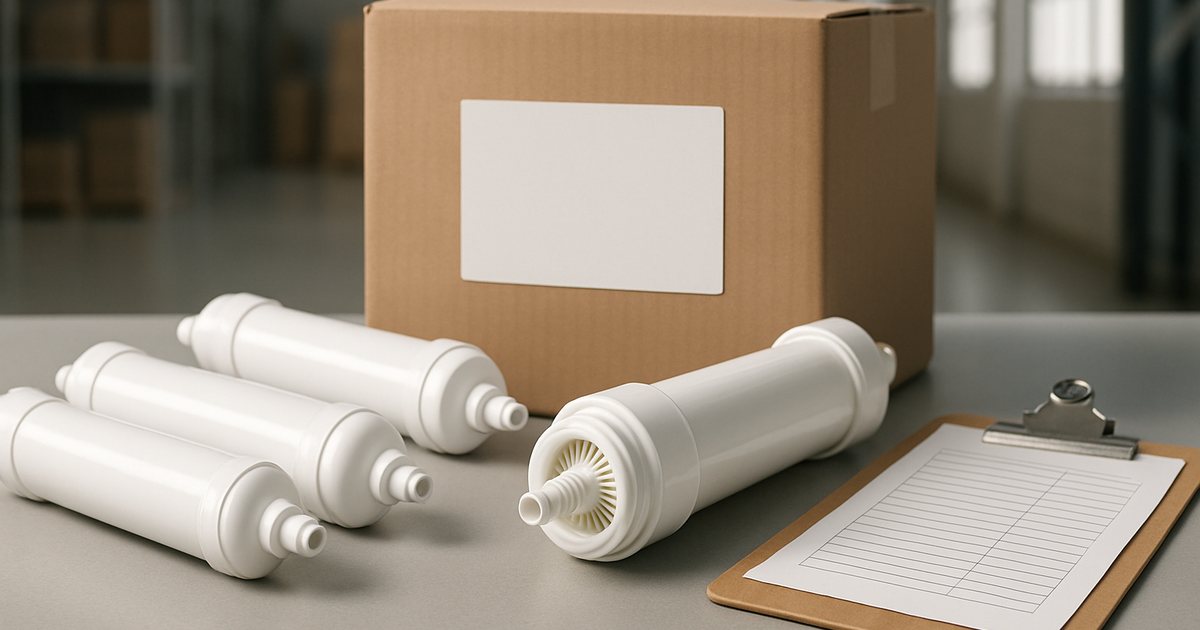
Short answer: In the United States, the claim on a water filter decides whether the EPA regulates it, not the media inside. A filter that only claims to improve taste, odor or sediment is outside FIFRA. A filter whose box, manual or listing says it removes bacteria, viruses or cysts is a pesticidal device. It needs an EPA Establishment Number on the outer packaging, directions for use, caution statements, claims backed by data, and a Notice of Arrival (EPA Form 3540-1) filed before each shipment lands. If it contains a disinfecting substance such as silver, it is a pesticide and needs full EPA registration. In January 2024, EPA had 4,400 Chinese-made filters refused at the border over one line in the manual: “99.9% of bacteria and parasites.”
We make UF, RO, carbon and sediment cartridges in Ningbo, and our own UF data sheet says “bacterial retention rate 99.99%”. This guide explains what that sentence can cost a US importer, and how to write claims for US artwork instead.
Last updated: 2026-10-14
Key takeaways
- EPA says filters that limit claims to taste, odor or sediment are generally not regulated under FIFRA. Any claim about bacteria, viruses or cysts makes the filter a pesticidal device.
- A device needs no product registration, but it must come from an EPA-registered establishment and show the EPA Est. No. on the outer packaging (40 CFR 152.500, 156.10, Part 167).
- Every shipment needs a Notice of Arrival, EPA Form 3540-1, before arrival (19 CFR 12.112). Refused goods must be exported within 90 days or they are destroyed (19 CFR 12.114).
- The maximum FIFRA civil penalty is $24,885 per violation (40 CFR 19.4, from 8 January 2025).
- 99.99% bacterial retention is 4-log. The EPA purifier standard asks for 6-log bacteria, 4-log virus, 3-log cyst.
The Line EPA Draws: Claims, Not Technology
FIFRA defines a device as “any instrument or contrivance … intended for trapping, destroying, repelling, or mitigating any pest”, and a pest includes “virus, bacteria, or other micro-organism” (FIFRA sections 2(h) and 2(t), 40 CFR 152.500(a)). The key word is intended. EPA reads intent from what you say about the product.
EPA’s pesticide device guide (last updated 29 September 2026) puts water filters into three groups:
| What the label, manual or listing says | FIFRA status | What you need |
|---|---|---|
| Improves taste and odor, reduces chlorine, sediment, rust | Not regulated under FIFRA | Normal import paperwork. Claims must still be true (FTC, state law). |
| Removes, traps or reduces bacteria, viruses, cysts, algae, by filtration only | Pesticidal device | EPA-registered establishment, Est. No. on outer packaging, directions, cautions, supporting data, Notice of Arrival |
| Contains silver or another substance that kills or suppresses microbes, or claims to “disinfect” or “sterilize” | Pesticide | Full EPA product registration (EPA Reg. No.) before sale, plus everything above |
The same cartridge can sit in any of the three rows. A UF hollow-fibre cartridge sold as “reduces turbidity and sediment to 0.01 µm” is in row 1. The identical part sold as “removes 99.99% of bacteria” is in row 2. EPA also says a filter that traps microbes becomes an antimicrobial pesticide if it also contains a pesticidal substance that kills them, which is how silver-impregnated carbon ends up in row 3. Our ice machine Legionella guide shows a registered silver carbon label (EPA Reg. No. 58295-2) for comparison.


What a “Pesticidal Device” Filter Must Have
Devices skip product registration. Under 40 CFR 152.500(b), “a device is not required to be registered under FIFRA sec. 3”. That is where many importers stop reading. The same paragraph lists what still applies: labeling (Part 156), establishment registration and reporting (Part 167), books and records (Part 169), inspections, enforcement and penalties (sections 9, 12, 13, 14), and import rules (section 17).
| Requirement | Rule | Who does it |
|---|---|---|
| Produce in an EPA-registered establishment (foreign sites included) | 40 CFR 167.20(a)(3) | Factory, on EPA Form 3540-8 or electronically via CDX |
| EPA Est. No. of the final producing site, visible on the outer packaging | FIFRA 2(q)(1), 40 CFR 156.10(f) | Factory prints, brand owner checks |
| Adequate directions for use | FIFRA 2(q)(1) | Brand owner |
| Warning or caution statements where needed | FIFRA 2(q)(1) | Brand owner |
| No false or misleading claims, including true statements that mislead | 40 CFR 156.10(a)(5) | Brand owner, with data from the factory |
| Records and data supporting every claim | EPA device guidance, Part 169 | Brand owner and factory |
| Annual production report, by March 1, covering only units exported to the US | 40 CFR 167.85 | Factory |
| Notice of Arrival, EPA Form 3540-1, before the shipment arrives | 19 CFR 12.112–12.113 | Importer or customs broker |
| State device registration, where a state requires it | State pesticide law | Brand owner |
Two points are easy to miss. First, a device label shows an Est. No. but no Reg. No. EPA says a Reg. No. appears only on registered pesticides, so a UF filter label claiming an “EPA Registration” is itself misleading. Second, EPA states that an Est. No. “does NOT indicate” the product was reviewed for safety or efficacy. It identifies the factory. It is not an approval, and you shouldn’t advertise it as one.

Not sure which row your SKUs are in?
Send us your current box, manual and Amazon copy. We'll mark every microbiological claim, propose row-1 wording, and tell you which SKUs would need the device route.
Request a claims reviewLooking for a reliable water filter manufacturer?
Get free samples and a factory-direct quote. MOQ from 500 pcs.
Get a Free Quote →Two Refused Shipments, and the Sentences That Caused Them
EPA Region 8 publishes its refusal memos to CBP. Two recent water filter cases show how little it takes.
| Patriot Pure personal water filters | LeveLuk K8 water unit | |
|---|---|---|
| Date / port | 31 Jan 2024 / Salt Lake City, UT | 17 Aug 2023 / Pembina, ND |
| Origin, quantity | China, 4,400 units (8,800 lb) | Not stated in memo |
| Claim EPA quoted | ”Our filter is capable of filtering 99.9% of bacteria and parasites” (in the manual) | “Reduce bacteria”, “To sterilize vegetables” (info sheet) |
| Finding | Device misbranded: no EPA Est. No., no directions for use, no caution statements, plus no Notice of Arrival | Device misbranded: false or misleading statements under 40 CFR 156.10(a)(5) |
| Outcome | Denied entry, refused delivery, marked “Re-Export” | Denied entry, refused delivery |
Sources: EPA Region 8 memoranda FIFRA-08-2024-0011 and FIFRA-08-2023-0064.
Look at where the claims were. Neither sat on the outer box. One was in a manual, the other on an info sheet. FIFRA section 2(p) defines labeling as all printed matter “accompanying the pesticide or device at any time” or referred to on the label. That covers your inserts, QR-linked web pages and marketplace listings.
The cost of refusal is set by 19 CFR 12.114: the goods are treated as a prohibited importation, and if the consignee doesn’t export them within 90 calendar days, CBP destroys them. On top of that, FIFRA section 14(a)(1) allows civil penalties of up to $24,885 per violation for penalties assessed on or after 8 January 2025 (40 CFR 19.4). Add demurrage, return freight and relabelling, and a single claim on a $3 cartridge can wipe out the margin on a whole container. Our landed cost guide shows how thin that margin usually is.
The Number Problem: What 99.99% Actually Means
Most Chinese UF data sheets, ours included, quote “bacterial retention 99.99%”. In log terms that’s simple to read:
| Percent reduction | Log reduction | Survivors per 1,000,000 | Benchmark |
|---|---|---|---|
| 90% | 1-log | 100,000 | |
| 99% | 2-log | 10,000 | |
| 99.9% | 3-log | 1,000 | EPA purifier bar for cysts |
| 99.95% | 3.3-log | 500 | NSF/ANSI 53 cyst reduction |
| 99.99% | 4-log | 100 | EPA purifier bar for viruses; typical UF data sheet for bacteria |
| 99.9999% | 6-log | 1 | EPA purifier bar for bacteria |
The EPA Guide Standard and Protocol for Testing Microbiological Water Purifiers (1987) set 6-log bacteria, 4-log virus and 3-log cyst reduction, in water with significant organic matter and turbidity (Rick Andrew, NSF, WC&P, 2012). NSF Protocol P231 is based on it. So a cartridge rated at 99.99% for bacteria is 100 times short of the bacteria bar that the word “purifier” implies in the US.
That doesn’t make a UF membrane a bad product. A 0.01–0.2 µm hollow fibre is excellent at turbidity, colloids and particles, and it makes a good polishing stage on chlorinated city water. See our UF membrane cartridge guide and RO vs UF vs NF comparison. The issue is narrower: the number on a factory data sheet is not, by itself, the data that supports a US label claim. Before you print any microbiological number, ask for:
- The test organism (e.g. Klebsiella terrigena, E. coli, MS2 phage) and challenge level.
- The water conditions (clean water or the turbid, high-organic “challenge” water in P231).
- The flow rate and the point in the cartridge’s life when samples were taken. A new cartridge at a low flow is the easiest case.
- The number of units tested and who ran the test.
If the report covers one new cartridge at 0.5 GPM in clean water, the honest claim is about that test, not “99.99% for 6 months”. Under 40 CFR 156.10(a)(5)(vii), “a true statement used in such a way as to give a false or misleading impression” is still misbranding. For how NSF scopes performance claims generally, see NSF 42 vs 53 vs 401.

Rewriting a Spec Sheet for US Artwork (Our Own, as the Example)
Here are the actual function lines from our I-type cartridge data sheet, and how we now write them for US packaging and listings when the buyer has chosen the non-device route.
| Stage | Our data sheet says | Row | US-safe wording (non-device route) |
|---|---|---|---|
| PP | ”Intercept sediment, rust, red worms, and large particulate organic matter” | 1 (but “red worms” invites questions) | “Reduces sediment, rust and particles down to 5 µm (nominal)“ |
| CTO / GAC | ”Adsorb impurities, odors, and residual chlorine” | 1 | ”Reduces chlorine taste and odor. Coconut shell carbon, iodine number ≥1,100 mg/g” |
| T33 | ”Removing residual chlorine, making it sweet and delicious” | 1 | ”Post-carbon polishing for taste and odor” |
| UF | ”Bacterial retention rate 99.99%… intercept colloids, spores, bacteria” | 2 | ”0.01–0.2 µm hollow-fibre membrane. Reduces turbidity, colloids and fine particles” |
| RO | ”Remove harmful substances such as bacteria, viruses, and heavy metals” | 2, and “harmful” plus “heavy metals” needs data | ”0.0001 µm RO membrane, ≥95% salt rejection (TDS)” |
On row-1 artwork we recommend adding the caution used on NSF-listed drinking water systems: “Do not use with water that is microbiologically unsafe or of unknown quality without adequate disinfection before or after the system.” It tells the user what the product is for and keeps the label away from any implied microbiological claim.
Watch for implied claims too. Pictures of bacteria being blocked, “germ-free”, “safe for babies”, “antibacterial housing”, or a microscope icon next to the UF stage can all be read as intent. The device guide and 40 CFR 156.10(a)(5)(ix) also treat bare safety claims (“safe”, “non-toxic”) as misleading. If your programme also sells into the EU, see our EU Drinking Water Directive 2026 guide. The marking and material rules there are different again.

Route A or Route B: Strip the Claim or Become a Device
For each SKU family, a US brand owner has two clean choices.
| Route A: taste / odor / sediment claims only | Route B: pesticidal device | |
|---|---|---|
| Microbiological claims | None, stated or implied | Allowed, if data supports the exact wording |
| EPA Est. No. on packaging | Not required | Required (final producing site) |
| Notice of Arrival (Form 3540-1) | Not required | Every shipment, before arrival |
| Annual report (March 1) | No | Yes, by the establishment |
| Amazon | Normal listing | Pesticide Marking attribute with Est. No. |
| State rules | General consumer law | Some states require device registration and label review |
| Best for | Fridge, coffee, ice, sediment, CTO, most UF used on city water | Outdoor, emergency, travel, well water, where the microbial claim is the product |
| Main risk | Copywriters slipping “bacteria” back into the listing | One missing Est. No. or NOA stops the container |
Most of our US foodservice and residential buyers choose Route A. Their customers buy cartridges for chlorine, taste and scale, and the water is already disinfected by the utility. Route B makes sense when the microbial claim is the reason to buy, and then it should be backed by P231-type testing, not a data sheet line.
If you private-label (see how to start a private-label water filter brand), decide the route before the dieline is approved. Changing a printed carton after production is the most expensive way to become compliant. The other legal risk on compatible cartridges, trademark use, is covered in our compatible vs counterfeit guide.
A Pre-Shipment Checklist for US Importers
Run this before the booking, not at the port:
- Read every piece of labeling for the SKU: carton, cartridge label, manual, insert, QR landing page, Amazon/Walmart copy, A+ content images.
- Mark every microbiological word: bacteria, virus, cyst, germ, microbe, E. coli, Giardia, Cryptosporidium, sterilize, disinfect, antibacterial, purify, plus pictures that imply them.
- Choose the route per SKU family. Route A: delete or rewrite every marked item. Route B: continue.
- Route B: get the Est. No. of the final producing site in writing, check it’s printed on the outer packaging, and check that the directions and caution statements are on the label.
- Route B: hold the test report that supports each claim, scoped to the exact wording.
- Route B: give your customs broker the Form 3540-1 data and a copy of the label so the Notice of Arrival is filed before the vessel arrives.
- Silver or any disinfecting additive? Stop. That’s a registered-pesticide question (EPA Reg. No.), not a device question.
Where We Stand, Honestly
Our own website and data sheets carry the “99.99% bacterial retention” line for UF and “removes bacteria, viruses” for RO, written for a global catalogue rather than US artwork. For US use they need rewriting, and we flag this to every US buyer. Our recommendation for US programmes is Route A wording by default, with a microbiological claim on a carton only when the device requirements are in place for that SKU family and the supporting test data is on file.
What we offer US importers:
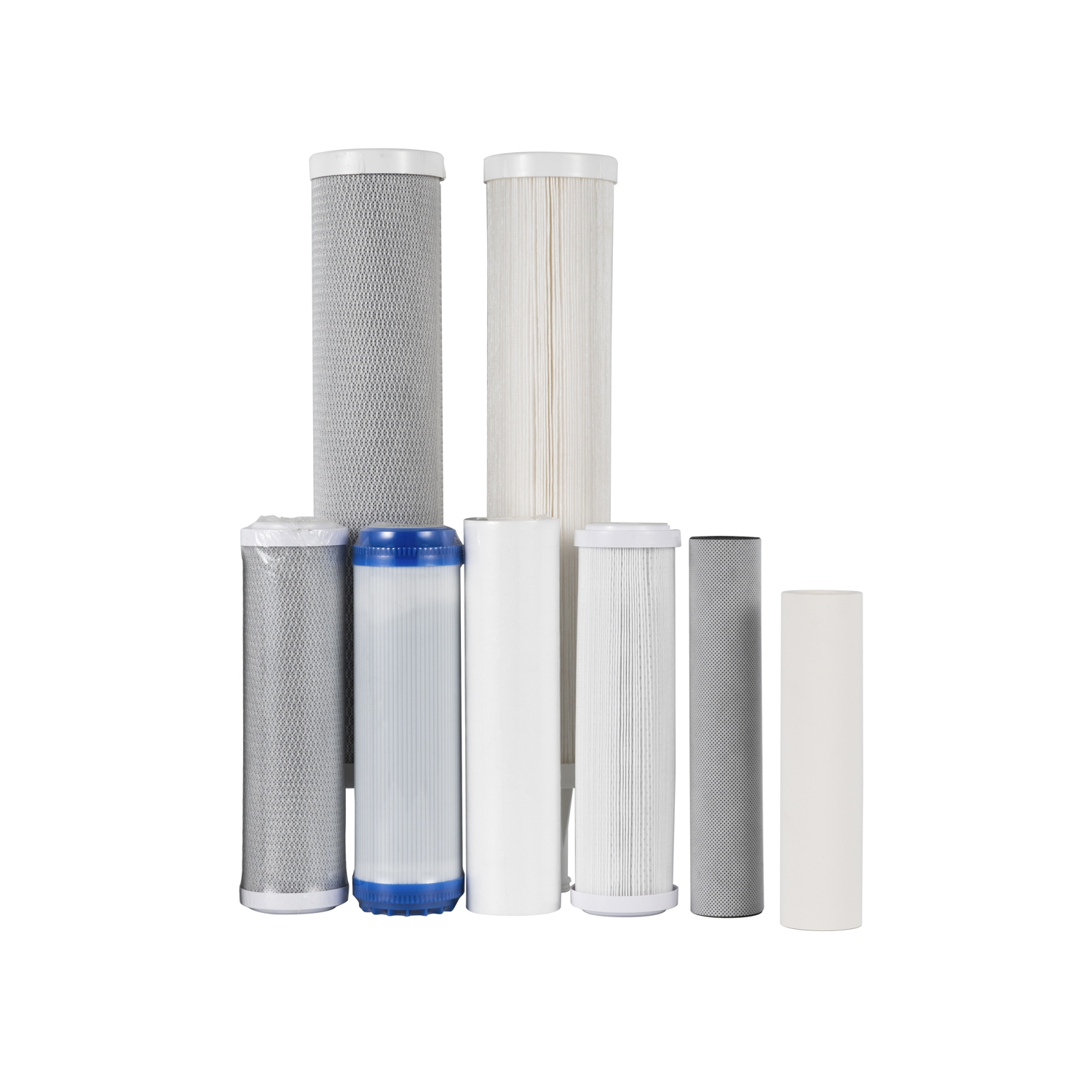
- Quick-connect I-type and U-type cartridges, multi-stage under-sink cartridge sets and I-type UF cartridges, with claims written per route.
- Coconut shell carbon (iodine ≥1,100 mg/g) with no silver in the quick-connect and under-sink lines, so they don’t fall into row 3 by accident. Our Aquaphor-compatible K7 has a silver carbon stage, which makes it a registered-pesticide question in the US, so we do not recommend it for US programmes.
- A claims sheet per SKU that lists every sentence on the carton, the manual and the suggested listing copy, through our OEM manufacturing service.
- Stock designs from 500 pieces, private label from around 2,000 pieces per SKU, 15–20 working days FOB Ningbo after artwork approval.
Related Guides
- Bidet seat water filter OEM: fittings, specs and the FIFRA claim trap
- Water filter certifications: NSF 42/53/58 vs FDA vs CE
- Water filter cartridge quality inspection (AQL and tests)
- Full product catalogue
Sources: FIFRA sections 2(h), 2(p), 2(q)(1), 2(t), 12(a)(1)(F), 14(a)(1), 17(c) (7 U.S.C. 136 et seq.); 40 CFR 152.500, 156.10, 167.20, 167.85, 19.4; 19 CFR 12.112–12.114; U.S. EPA, “Pesticide Devices: A Guide for Consumers” (updated 29 September 2026); EPA Region 8 memoranda FIFRA-08-2024-0011 (2 February 2024) and FIFRA-08-2023-0064 (18 August 2023); R. Andrew, “Overview of global standards, protocols and guidelines for POU/POE microbial reduction claims”, Water Conditioning & Purification, October 2012. This article is technical guidance from a manufacturer and is not legal advice.
Frequently Asked Questions
- Is a water filter regulated by the EPA under FIFRA?
- It depends on the claims, not on the technology. EPA's pesticide device guidance says water filters that limit their claims to taste, odor or sediment are generally not pesticidal devices and are not regulated under FIFRA. A filter that claims to remove, kill, inactivate or suppress bacteria, viruses, cysts, fungi or algae by physical means (for example a UF membrane) is a pesticidal device under FIFRA section 2(h) and 40 CFR 152.500. A filter that contains a substance intended to disinfect the water, such as silver, is generally a pesticide and must be registered with EPA before it is sold.
- Does a pesticidal device water filter need EPA registration?
- No product registration, but it is still regulated. Under 40 CFR 152.500(b), a device is not registered under FIFRA section 3. It must be produced in an EPA-registered establishment, its outer packaging must show the EPA Establishment Number of the final producing site, its labeling must include adequate directions for use and any needed caution statements, and it must not carry false or misleading claims. The producer must also file an annual production report on or before March 1 under 40 CFR 167.85, and the importer must file a Notice of Arrival (EPA Form 3540-1) before each shipment arrives.
- What happens if an imported water filter makes bacteria claims without an EPA Establishment Number?
- EPA can tell CBP to refuse entry. In January 2024, EPA Region 8 had a shipment of 4,400 personal water filters from China refused at Salt Lake City because the manual said the filter removed '99.9% of bacteria and parasites' while the label had no EPA Establishment Number, no directions for use and no caution statements. Under 19 CFR 12.114, a refused shipment must be exported within 90 calendar days or CBP destroys it. EPA can also seek civil penalties of up to $24,885 per violation under FIFRA section 14(a)(1), as adjusted in 40 CFR 19.4 from 8 January 2025.
- Does the instruction manual or an Amazon listing count as labeling?
- Yes. FIFRA section 2(p) defines labeling as all written, printed or graphic matter accompanying the product or referred to on the label. In the 2024 Patriot Pure case, the bacteria claim EPA cited was in the manual that came with the filter, not on the box. Amazon applies its own Pesticides and Pesticide Devices policy, so a listing that claims to remove bacteria can be blocked until the seller enters an EPA Establishment Number or Registration Number, or removes the claims.
- What is the difference between a water filter and a water purifier in the US?
- The word 'purifier' comes from the EPA Guide Standard and Protocol for Testing Microbiological Water Purifiers (1987), which sets the bar at 6-log (99.9999%) reduction of bacteria, 4-log (99.99%) of viruses and 3-log (99.9%) of cysts. NSF Protocol P231 is based on it. A UF cartridge rated at 99.99% bacterial retention is a 4-log product, two orders of magnitude below the purifier bacteria requirement, so it should not be sold as a purifier on that number alone.
- Can I keep the bacteria claim if I have a test report from the factory?
- Only if you also follow the device rules, and only if the report supports the exact wording. A test report does not replace the EPA Establishment Number, the Notice of Arrival or the labeling requirements. It is the data you are required to keep on file to support the claim. The report should name the test organism, challenge level, water conditions, flow rate and the number of units tested, and the claim on the label should not go further than the result. A lab report on one new cartridge at one flow rate does not support '99.99% for the life of the filter'.
- What does XZH supply for a US private-label programme, and what are the MOQ and lead time?
- We supply quick-connect (I-type and U-type), snap-in and 10-inch cartridges in PP, CTO carbon block, T33 post-carbon, UF and RO formats. For US artwork we write the claims with you before the label is printed: taste, odor, chlorine and sediment claims by default, and bacteria or virus claims only when the device route is in place and the test data is on file. Our quick-connect and under-sink carbon stages use coconut shell activated carbon with no silver. The silver carbon stage in our Aquaphor-compatible K7 is made for the Russian and CIS market and we do not recommend it for US labels. Stock designs start at 500 pieces, private label at around 2,000 pieces per SKU, with 15 to 20 working days lead time FOB Ningbo after artwork approval.
Looking for OEM Water Filter Cartridges?
Get a factory-direct quote from Ningbo XZH — 15+ years OEM experience, 50+ export markets, MOQ from 500 pcs.
Get a Free Quote →Get Our Full Product Catalog
100+ SKUs with specs, MOQ, and factory-direct wholesale pricing — everything covered in this article and more.