
Blog ·
Water Filter Replacement for Coffee Chains: Sizing, Scheduling & Cost Control Across 50+ Locations
How multi-location coffee chains standardize water filter replacement — flow-rate sizing for high-volume espresso, Everpure vs 3M platform comparison, and OEM cartridge strategies that cut costs 30-50% at scale.
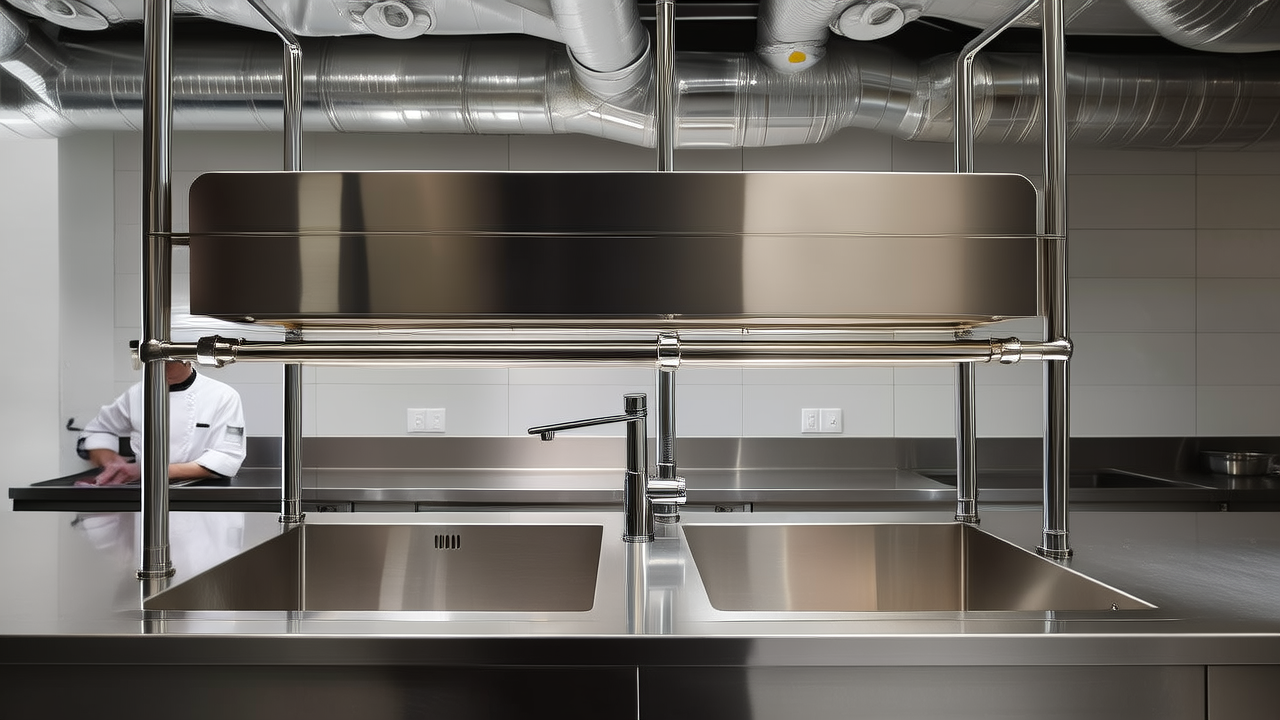
Selecting the right water filter for a commercial coffee machine is not a procurement afterthought — it is a decision that directly affects equipment lifespan, cup quality, warranty compliance, and recurring operating cost. For operators managing 5, 50, or 500 locations, the filter platform choice compounds across every site: the wrong system wastes thousands annually on premature cartridge changes, while the right one protects $15,000-$40,000 espresso machines and delivers consistent extraction across every location.
This guide is written for multi-location operators, franchise procurement teams, and foodservice distributors who need to standardize water filtration across commercial coffee programs. It covers platform selection, capacity sizing, replacement scheduling, and how OEM-compatible cartridges reduce the single largest recurring cost in commercial coffee water treatment.
Why Commercial Coffee Machines Demand Specialized Water Filtration
Commercial coffee equipment operates under conditions that amplify every water quality problem:
-
Boiler temperatures of 92-96°C accelerate scale formation exponentially. Calcium carbonate precipitation doubles for every 10°C increase above ambient. A commercial espresso boiler running at 93°C scales 8-16 times faster than the same water sitting in a cold pipe. Scale insulates heating elements (increased energy cost, slow recovery between shots), restricts flow through group heads and steam wands, and causes the majority of espresso machine service calls costing $300-$800 per visit.
-
Volume multiplies exposure. A busy cafe pulls 300-500 espresso shots per day, running 25-35 gallons of water through the machine daily. Over 6 months, that is 4,500-6,300 gallons of untreated water depositing minerals inside the boiler, heat exchangers, and valves. Residential filters rated for 300 gallons are exhausted in 10-12 days at commercial volumes.
-
Chlorine at any detectable level ruins the cup. Municipal water carries 0.5-2.0 ppm free chlorine. The human taste threshold in brewed coffee is approximately 0.1 ppm — well below tap water levels. Beyond taste, chlorine degrades rubber gaskets, O-rings, check valves, and group head seals over time, increasing maintenance frequency.
-
Equipment manufacturers require filtration for warranty coverage. La Marzocco, Nuova Simonelli, Victoria Arduino, and Synesso all require water treatment and explicitly exclude scale damage from warranty. An unfiltered $30,000 Synesso with scale failure is an uninsured loss.
Filter Platform Comparison: Everpure vs. 3M vs. BWT for Commercial Coffee
Three filtration platforms dominate the commercial coffee segment. Each has different strengths, cost structures, and compatibility with OEM alternatives.
Everpure (Pentair) — The Industry Standard
| Specification | Details |
|---|---|
| Connection type | Bayonet head (QC twist-lock) |
| Key coffee models | 4FC, MC2, H-300, 2FC, 4CB5, 7FC |
| Capacity range | 1,500-9,000 gallons per cartridge |
| Filtration | 0.5 micron carbon block + scale inhibitor |
| OEM alternatives available | Yes — bayonet interface is widely cross-manufactured |
| Installed base | 60%+ of US commercial coffee locations |
Everpure dominates because of distribution — nearly every foodservice equipment dealer stocks Everpure heads and cartridges. The bayonet connection is robust and leak-proof, and the product line covers every volume tier from small cafes (2FC at 1,500 gal) to high-volume chains (7FC at 7,500 gal). The primary drawback is cost: branded Everpure cartridges run $80-$180 per unit at distributor pricing, with some specialty models exceeding $200.
3M Water Filtration (SQC Platform)
| Specification | Details |
|---|---|
| Connection type | SQC (Sanitary Quick Change) — proprietary |
| Key coffee models | HF20-S, HF25-S, HF35-CLS, HF40-S |
| Capacity range | 5,000-35,000 gallons per cartridge |
| Filtration | 0.5-1.0 micron carbon block, optional scale inhibitor |
| OEM alternatives available | No — proprietary SQC connection |
| Installed base | 20-25% of US commercial coffee locations |
3M systems offer significantly higher capacity per cartridge, reducing change frequency at high-volume locations. The HF25-S (9,000 gal) and HF35-CLS (16,000 gal with scale inhibitor filters) are popular choices for chains serving 400+ cups daily. However, the proprietary SQC connection means no aftermarket alternatives — you buy 3M or nothing. This creates long-term vendor lock-in.
BWT (Best Water Technology)
| Specification | Details |
|---|---|
| Connection type | Proprietary head system |
| Key coffee models | Bestmax V, Bestmax Premium, Bestmax S |
| Capacity range | 1,000-10,500 liters (260-2,770 gallons) |
| Filtration | Ion exchange + activated carbon |
| OEM alternatives available | Limited |
| Installed base | Dominant in Europe, growing in US specialty segment |
BWT uses a different approach — magnesium-based ion exchange that replaces calcium with magnesium, theoretically improving extraction flavor. The technology is well-regarded in the European specialty coffee community but has lower capacity per cartridge than Everpure or 3M at comparable price points, making it expensive for high-volume US operations.
Platform Decision Matrix
| Factor | Everpure | 3M SQC | BWT |
|---|---|---|---|
| Best for | Multi-location standardization | High-volume single locations | Premium specialty cafes |
| Cost per gallon (branded) | $0.02-$0.04 | $0.01-$0.02 | $0.04-$0.08 |
| Cost per gallon (OEM) | $0.01-$0.02 | No alternative | Limited alternatives |
| Change frequency (300 cups/day) | Every 4-6 months | Every 8-12 months | Every 3-5 months |
| Vendor lock-in risk | Low (OEM options) | High (proprietary) | Medium |
| Distributor availability (US) | Excellent | Good | Fair |
Recommendation for multi-location operators: Everpure-platform systems provide the best combination of availability, performance, and cost optimization through OEM-compatible cartridges. 3M is the right choice only for very-high-volume locations (500+ cups/day) where the higher capacity per cartridge justifies the vendor lock-in.
Looking for a reliable water filter manufacturer?
Get free samples and a factory-direct quote. MOQ from 500 pcs.
Get a Free Quote →Sizing a Commercial Coffee Machine Water Filter
Undersized filters fail before the scheduled change date, leaving machines unprotected. Oversized filters waste money on unused capacity. Here is the sizing methodology:
Step 1: Calculate Daily Water Consumption
| Equipment | Water Usage Per Unit |
|---|---|
| Espresso machine (double shots) | 1 gallon per 15-20 shots |
| Drip/batch brewer (12-cup) | 0.75-1.0 gallon per batch |
| Steam wand (milk drinks) | 0.3-0.5 gallons per hour of steaming |
| Hot water tower | 2-5 gallons per day |
Example — Busy specialty cafe:
- 400 espresso shots/day = 20-27 gallons
- 15 drip batches/day = 11-15 gallons
- Steam: 6 hours active = 1.8-3.0 gallons
- Hot water tower: 3 gallons
- Total: 36-48 gallons per day
Step 2: Calculate Required Cartridge Capacity
Multiply daily consumption by your target replacement interval (typically 180 days / 6 months), then add a 20% safety margin:
48 gallons/day x 180 days x 1.2 safety factor = 10,368 gallons minimum
This location needs either a single high-capacity cartridge (Everpure 7FC at 7,500 gal would fall short — consider a twin-head parallel system with two 4FC cartridges) or a 3M HF35-CLS (16,000 gal).
Step 3: Verify Flow Rate
Commercial espresso machines require 0.5-1.0 GPM (gallons per minute) flow rate during operation. Verify that the filter cartridge supports this flow rate at the end of its life — not just when new. Carbon block cartridges lose flow capacity as sediment accumulates. A filter rated at 1.5 GPM new may drop to 0.8 GPM at 80% capacity. If flow drops below the machine’s minimum, extraction suffers (long shot times, temperature instability).
Replacement Scheduling: Calendar vs. Capacity vs. Flow Monitoring
The most common mistake in commercial coffee filtration is relying solely on calendar-based replacement schedules. Here is why, and what to do instead:
| Method | Accuracy | Cost | Recommended For |
|---|---|---|---|
| Calendar (every 6 months) | Low — ignores actual usage | Free | Small single-location cafes with consistent volume |
| Capacity tracking (gallon meter) | High — measures actual throughput | $50-$100 per meter | Multi-location operators, any location with variable volume |
| Flow rate monitoring | Highest — detects capacity exhaustion before quality drops | $150-$300 per sensor | High-volume and premium specialty locations |
Best practice for chains: Install a $50 mechanical flow meter on the filter inlet at every location. Track cumulative gallons and replace at 90% of rated capacity. This prevents both premature changes (wasting cartridge life) and overdue changes (risking scale damage and off-flavors).
Align filter changes with the espresso machine’s preventive maintenance schedule — descale, backflush, and filter change on the same service visit reduces labor cost and downtime.
OEM-Compatible Cartridges: Cutting the Largest Recurring Cost
For a single cafe changing two Everpure cartridges per year, branded vs. OEM savings are modest — perhaps $60-$120 annually. But at chain scale, the math changes dramatically:
| Chain Size | Annual Branded Cost | Annual OEM Cost | Annual Savings |
|---|---|---|---|
| 10 locations | $3,600-$7,200 | $1,800-$3,600 | $1,800-$3,600 |
| 50 locations | $18,000-$36,000 | $9,000-$18,000 | $9,000-$18,000 |
| 200 locations | $72,000-$144,000 | $36,000-$72,000 | $36,000-$72,000 |
Assumes 2 cartridge changes per location per year at $90-$180 per branded cartridge vs. $45-$90 per OEM cartridge.
What to Verify in an OEM-Compatible Cartridge
Not all aftermarket cartridges are equal. Here is what procurement teams should validate:
- Dimensional match — Cartridge length, diameter, and bayonet head dimensions must be within 0.5mm of the OEM specification for proper seating and seal compression
- Carbon media — Coconut shell CTO carbon block filter (not granular, not coal-based) with the same micron rating (typically 0.5 or 1.0 micron)
- Scale inhibitor — If replacing a scale-inhibiting cartridge (Everpure 4FC, MC2), the OEM alternative must contain phosphate-based scale inhibitor, not just carbon
- NSF certification — NSF/ANSI 42 (aesthetic) and ideally NSF/ANSI 53 (health) — verify by searching the NSF listing database, not by trusting the label
- Factory certification — ISO 9001 manufacturing, with batch-level QC records available
XZH Environmental Technology manufactures Everpure-compatible bayonet-head cartridges in our ISO 9001-certified facility. Our cartridges use coconut-shell activated carbon block media with the same 0.5-micron rating and integrated polyphosphate scale inhibitor as OEM originals. Browse our commercial coffee filtration range or request samples and pricing.
Installation Best Practices for Commercial Coffee Filtration
Proper installation prevents the two most common field failures — leaks and air locks:
- Mount the filter head vertically with cartridges hanging downward. Horizontal mounting traps air in the cartridge, reducing effective filtration area by 10-20%.
- Flush 3-5 gallons through a new cartridge before connecting to the espresso machine. This removes carbon fines (black particles) that would otherwise end up in the first 10-20 cups.
- Install a pressure gauge upstream and downstream of the filter. A pressure drop exceeding 10 PSI indicates the cartridge is approaching exhaustion — replace regardless of gallon count.
- Use a bypass valve for emergency situations. If a cartridge fails and replacement is not immediately available, a bypass lets the machine run on unfiltered water temporarily rather than shutting down entirely. Mark the bypass clearly and track usage — the machine is unprotected during bypass.
FAQ
What type of water filter does a commercial coffee machine need? A commercial coffee machine requires a dual-function filter: coconut-shell activated carbon block (0.5-5 micron) for chlorine, taste, and sediment removal, plus a scale inhibitor (polyphosphate) for boiler protection. For high-TDS water above 300 ppm, add a partial RO stage with mineral blending.
How often should commercial coffee machine water filters be replaced? Replace at rated gallon capacity or every 6 months, whichever comes first. High-volume locations (400+ cups/day) may exhaust a 2,500-gallon cartridge in 3-4 months. Install a mechanical flow meter to track actual usage.
Can I use OEM-compatible cartridges instead of Everpure originals? Yes, for Everpure bayonet-head systems. The bayonet interface is widely cross-manufactured by certified factories. OEM-compatible cartridges cost 30-50% less. 3M SQC systems are proprietary with no generic alternatives.
What water quality does the SCA recommend for commercial coffee? The SCA targets 75-250 ppm TDS (ideal 150 ppm), calcium hardness 50-175 ppm (ideal 68 ppm), alkalinity 40-70 ppm, pH 6.5-7.5, and zero chlorine.
How do I size a water filter for a high-volume coffee operation? Calculate daily water consumption (espresso: 1 gal per 15-20 shots; drip: 1 gal per 12-15 cups), multiply by 180 days, and add 20% safety margin. A 500-shot-per-day location needs approximately 10,000 gallons of capacity over 6 months.
Need commercial coffee machine water filters at wholesale pricing? XZH Environmental Technology is an ISO 9001-certified OEM water filter manufacturer of Everpure-compatible cartridges with integrated scale inhibitor. Browse our coffee machine filter range, explore quick-connect inline water filters, or contact us for samples and bulk pricing.
Related Guides
- Everpure 4FC Replacement Cartridge: High-Capacity Water Filter Guide
- Coffee Machine Water Filters
- Everpure MC2 Replacement Cartridge: Dual-Stage Sediment + Carbon Guide
- Commercial Coffee Machine Water Filter
- Coffee Machine Water Filters OEM | Everpure-Compatible | XZH
- Browse Everpure-compatible filter cartridges
- Browse coffee machine water filters
Frequently Asked Questions
- What type of water filter does a commercial coffee machine need?
- A commercial coffee machine requires a dual-function filter system: a coconut-shell activated carbon block (0.5-5 micron) for chlorine, taste, and sediment removal, plus a scale inhibitor (polyphosphate or siliphos) for boiler protection. The carbon block is the core stage — it must reduce chlorine to below 0.1 ppm, which is the human taste detection threshold in brewed coffee. For high-TDS water (above 300 ppm), add a partial RO stage with mineral blending to bring TDS into the SCA-recommended 75-250 ppm range.
- How often should commercial coffee machine water filters be replaced?
- Replace at rated gallon capacity or every 6 months, whichever comes first. A standard 2,500-gallon cartridge lasts approximately 6 months at 150-200 cups per day. High-volume locations serving 400+ cups daily may exhaust capacity in 3-4 months. Install a mechanical flow meter on the inlet line to track actual usage rather than relying on calendar-based schedules, which can lead to premature or overdue changes.
- Can I use OEM-compatible cartridges instead of Everpure originals in commercial coffee machines?
- Yes, for Everpure bayonet-head systems (4FC, MC2, H-300, 2FC, 4CB5). The bayonet interface dimensions are widely cross-manufactured by ISO 9001-certified factories using identical coconut-shell carbon block media and NSF-certified materials. OEM-compatible cartridges cost 30-50% less at equivalent filtration performance. 3M SQC systems use a proprietary connection that does not have compatible alternatives.
- What water quality specifications does the SCA recommend for commercial coffee?
- The Specialty Coffee Association recommends 75-250 ppm TDS (target 150 ppm), calcium hardness of 50-175 ppm (target 68 ppm), total alkalinity of 40-70 ppm, pH between 6.5-7.5, and zero detectable chlorine. Water outside these ranges produces noticeably inferior extraction — too soft yields sour, flat espresso while too hard creates chalky, over-extracted cups and accelerates scale buildup.
- How do I size a water filter for a high-volume commercial coffee operation?
- Calculate daily water consumption: espresso machines use approximately 1 gallon per 15-20 shots, drip brewers use 1 gallon per 12-15 cups. Multiply daily consumption by 180 days (6-month target interval) to get the minimum cartridge capacity needed. Add a 20% safety margin for peak periods. For a location pulling 500 espresso shots plus 200 drip cups per day, you need approximately 8,100 gallons of capacity over 6 months — requiring either a high-capacity single cartridge (9,000-10,000 gallon) or a twin-cartridge parallel system.
Looking for OEM Water Filter Cartridges?
Get a factory-direct quote from Ningbo XZH — 15+ years OEM experience, 50+ export markets, MOQ from 500 pcs.
Get a Free Quote →Get Our Full Product Catalog
100+ SKUs with specs, MOQ, and factory-direct wholesale pricing — everything covered in this article and more.