Blog ·
Coffee Machine Water Filters OEM | Everpure-Compatible | XZH
Everpure-compatible coffee filters: scale inhibition, 99% chlorine removal, NSF certified. Factory-direct OEM, 30–50% below branded. MOQ 500 pcs. Free sample →
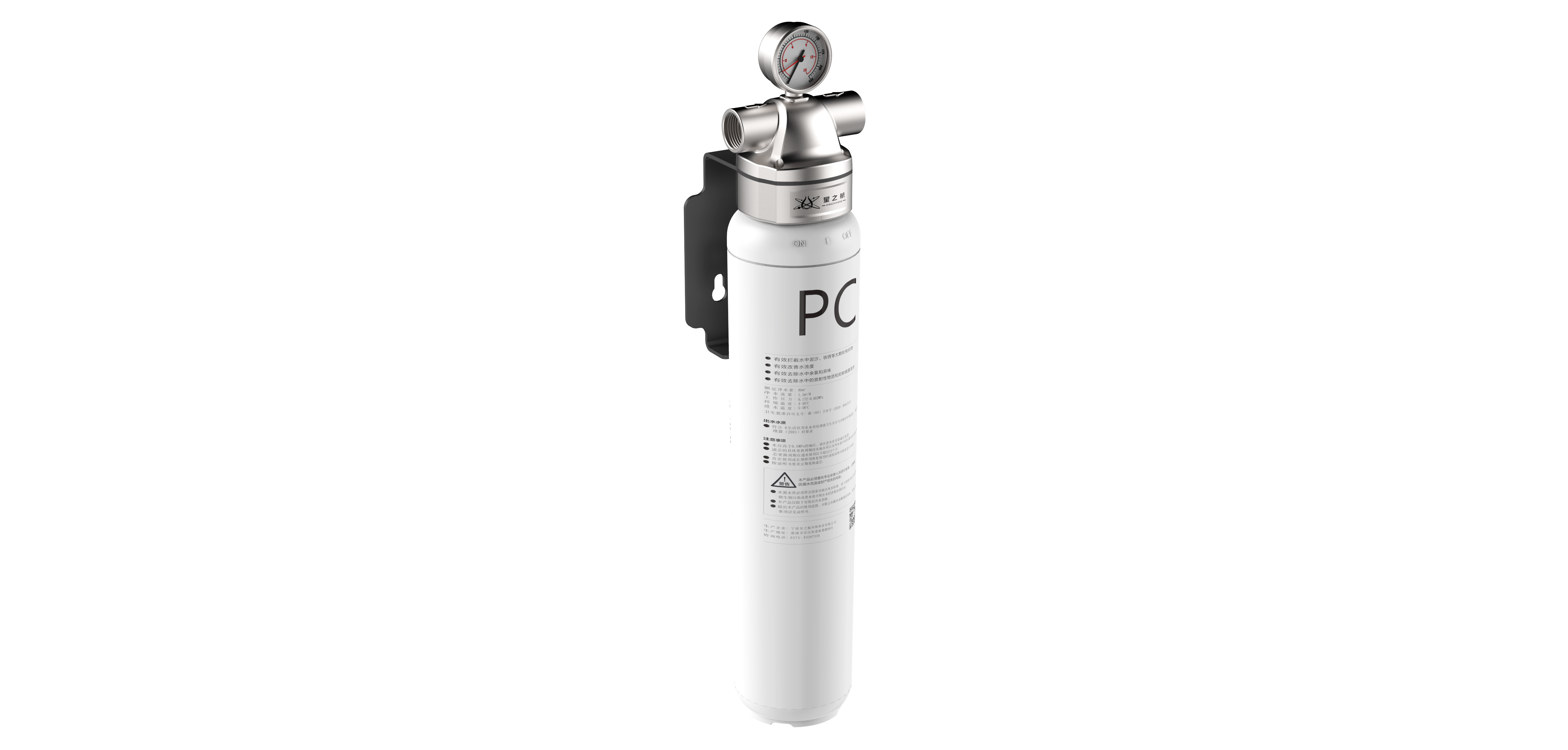
A commercial espresso machine costs $15,000-$40,000. The beans are single-origin, competition-grade. The barista is trained. But if the water filter is wrong — or absent — none of it matters. Scale chokes the boiler, chlorine flattens the cup, and the machine’s warranty becomes void the moment the service technician finds untreated water damage.
For equipment distributors, foodservice operators, and private-label brands sourcing water filters for coffee machines, the filter cartridge is the highest-volume recurring consumable in the entire coffee program. Choosing the right OEM manufacturer for these cartridges determines product quality, cost structure, and supply reliability across every location you serve.
This guide covers which coffee machine water filters perform best, what separates a premium cartridge from a commodity one, and how to source OEM-compatible filters at 30-50% below branded pricing without compromising filtration performance.
Why Coffee Machines Need Specialized Water Filtration
Coffee extraction is uniquely sensitive to water chemistry. Unlike ice machines or fountain dispensers that simply need clean water, coffee requires a precise mineral balance for proper extraction — while simultaneously demanding complete chlorine removal and aggressive scale prevention.
The Three Problems Every Coffee Filter Must Solve
1. Scale Prevention — The Equipment Killer
Espresso boilers operate continuously at 92-96°C. At these temperatures, calcium carbonate precipitation accelerates 8-16 times faster than at ambient temperature. Scale deposits insulate heating elements (increasing energy costs and slowing shot recovery), restrict flow through group heads and steam wands, and cause the majority of espresso machine service calls at $300-$800 per visit.
Every major equipment manufacturer — La Marzocco, Nuova Simonelli, Synesso, Victoria Arduino — requires treated water and explicitly excludes scale damage from warranty coverage.
2. Chlorine Removal — The Taste Destroyer
Municipal water carries 0.5-2.0 ppm free chlorine. The human taste threshold for chlorine in brewed coffee is approximately 0.1 ppm — far below what comes out of most taps. Any residual chlorine is immediately detectable in espresso. Beyond taste, chlorine degrades rubber gaskets, O-rings, and check valves inside the machine, increasing maintenance frequency and parts costs.
3. Mineral Balance — The Extraction Variable
The Specialty Coffee Association (SCA) recommends specific water chemistry for optimal extraction:
| Parameter | SCA Target | Acceptable Range |
|---|---|---|
| TDS | 150 ppm | 75-250 ppm |
| Calcium hardness | 68 ppm (CaCO3) | 50-175 ppm |
| Total alkalinity | 40 ppm | 40-70 ppm |
| pH | 7.0 | 6.5-7.5 |
| Chlorine | 0 ppm | 0 ppm |
| Sodium | < 30 ppm | < 30 ppm |
Strip the water to near-zero TDS with straight reverse osmosis and espresso turns flat, sour, and under-extracted. Leave minerals too high and the cup becomes harsh and chalky. The best coffee machine water filters deliver water within this precise window.
For a deeper comparison of scale control technologies, see our guide on polyphosphate vs softener vs RO for scale prevention.
Best Coffee Machine Water Filter Types: Ranked by Application
Not all coffee operations have the same filtration requirements. The best filter depends on water source quality, daily volume, equipment type, and budget.
1. Carbon Block with Integrated Scale Inhibitor — Best for Most Cafes
This is the workhorse combination for 80%+ of commercial coffee installations. A single cartridge houses a coconut-shell activated carbon block (0.5-5 micron) for chlorine, taste, and sediment removal, with an integrated polyphosphate scale inhibitor that keeps calcium and magnesium in suspension.
Best for: Single-location cafes, restaurant coffee programs, hotel breakfast service, office coffee
Key specifications to evaluate:
| Spec | Premium Grade | Standard Grade |
|---|---|---|
| Carbon source | Coconut shell | Coal-based |
| Iodine value | 1,050+ mg/g | 800-950 mg/g |
| Micron rating | 0.5-1.0 µm | 5.0 µm |
| Chlorine reduction | 99%+ for full rated life | Drops below 85% before capacity |
| Scale inhibitor | Integrated polyphosphate | Separate dosing required |
Why it matters: A cartridge with 1,050+ iodine value coconut shell carbon maintains 99%+ chlorine reduction for its entire rated service life. A 750 iodine value coal-based cartridge drops below the NSF 42 minimum (85%) well before rated capacity — leading to taste complaints and early replacement.
2. High-Capacity Carbon Block — Best for Chain Operations
Multi-location operators need cartridges that maximize the interval between changes. A filter change at one location is a minor task; coordinating changes across 50-500 locations is a logistics operation.
Best for: QSR chains (McDonald’s, Starbucks-style), franchise networks, managed coffee programs
Key models and capacities:
| Cartridge Platform | Capacity | Change Interval (300 cups/day) | OEM Available |
|---|---|---|---|
| Everpure H-300 class | 9,000 gal | ~10 months | Yes |
| Everpure 7FC class | 7,500 gal | ~8 months | Yes |
| 3M HF35-CLS | 16,000 gal | ~18 months | No (proprietary SQC) |
| 3M HF25-S | 9,000 gal | ~10 months | No (proprietary SQC) |
The practical advantage of Everpure-type bayonet systems for chains: OEM-compatible cartridges are available, creating a competitive supply market that keeps pricing transparent. 3M SQC systems lock you into a single vendor.
3. Partial RO with Mineral Blending — Best for Very Hard Water
When source water exceeds 300 ppm TDS or 200 ppm hardness, carbon block plus polyphosphate is insufficient. A partial reverse osmosis stage removes excess minerals, and a blending valve reintroduces a controlled percentage of bypass water to hit the SCA target range.
Best for: Specialty coffee roasters, locations with extremely hard municipal water, precision brewing programs
Cost consideration: RO-based systems are 3-5x the upfront cost of carbon block, plus membrane replacement every 2-3 years. Only justified when source water quality demands it.
For more on RO membrane technology, see our product range.
Looking for a reliable water filter manufacturer?
Get free samples and a factory-direct quote. MOQ from 500 pcs.
Get a Free Quote →Everpure-Compatible OEM Cartridges: The Largest Aftermarket Opportunity
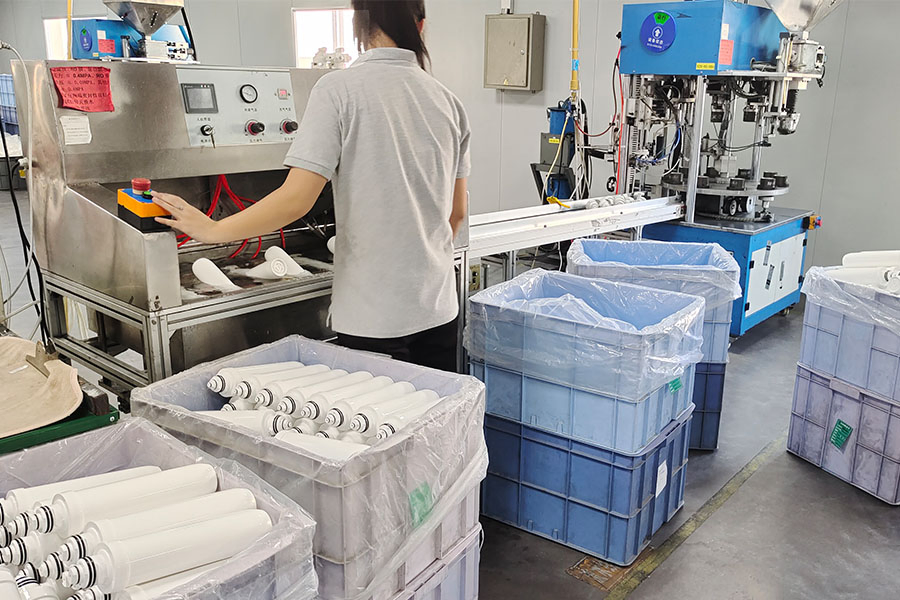
Everpure (Pentair) holds approximately 60%+ of the installed base in North American commercial coffee filtration. Their bayonet-head connection — a quarter-turn twist-lock interface — is the most widely cross-manufactured connection type in the industry.
This creates the largest aftermarket opportunity in coffee machine water filtration: OEM-compatible cartridges that fit Everpure heads at 30-50% below branded pricing.
Cross-Reference: Everpure Models and OEM Equivalents
| Everpure Model | Capacity | Application | Branded Price (Approx.) | OEM Price Range |
|---|---|---|---|---|
| MC2 | 2,500 gal | Small cafe, single-group espresso | $85-$110 | $42-$65 |
| 4FC | 6,000 gal | Busy cafe, multi-group, drip battery | $95-$130 | $48-$75 |
| H-300 | 9,000 gal | High-volume roastery, hotel, chain | $140-$180 | $70-$100 |
| 2FC | 1,500 gal | Low-volume office, single-serve | $75-$95 | $38-$55 |
| 4CB5 | 5,000 gal | Standard cafe, balanced price/capacity | $90-$120 | $45-$70 |
Annual savings at scale:
- 10 locations × 2 changes/year × $50 savings = $1,000/year
- 50 locations × 2 changes/year × $50 savings = $5,000/year
- 200 locations × 2 changes/year × $50 savings = $20,000/year
For detailed model-by-model compatibility, see our Everpure-compatible cartridge line.
What Makes an OEM Coffee Machine Water Filter “Best”?
When evaluating OEM manufacturers for coffee machine water filters, five specifications separate premium products from commodity ones:
1. Carbon Quality — Iodine Value Above 1,050 mg/g
The carbon media is the core of the cartridge. Insist on coconut shell activated carbon with an iodine value of 1,050 mg/g or higher. This ensures the cartridge meets NSF/ANSI 42 chlorine reduction requirements (minimum 85%) for its full rated service life — not just at initial testing.
Request the carbon supplier’s Certificate of Analysis (COA) with every production batch. Legitimate manufacturers provide this as standard practice.
2. Precision-Manufactured Connection Interface
For Everpure-compatible cartridges, the bayonet interface must match OEM dimensions within ±0.1mm tolerance. Poor-quality bayonet fittings cause leaks, incomplete seating (bypassing the carbon block), and premature head wear. Test every new supplier’s cartridge in a genuine Everpure head before approving production.
3. Pressure Drop Under 1.0 PSI at Rated Flow
A well-designed carbon block maintains flow rate without excessive pressure drop. Cartridges with pressure drop exceeding 1.5 PSI at rated flow restrict water delivery to the espresso machine, causing slow shot times and inconsistent extraction. Premium manufacturers test pressure drop on every production batch.
4. NSF/ANSI 42 and 53 Certification
NSF/ANSI 42 vs 53 certifications adds credibility for health-conscious markets and premium positioning.
5. Scale Inhibitor Integration
The best coffee machine filters integrate polyphosphate or siliphos media within the carbon block housing, eliminating the need for a separate scale dosing system. This simplifies installation, reduces failure points, and ensures scale protection is always present — not dependent on a separate system being maintained.
How to Source OEM Coffee Machine Water Filters from China
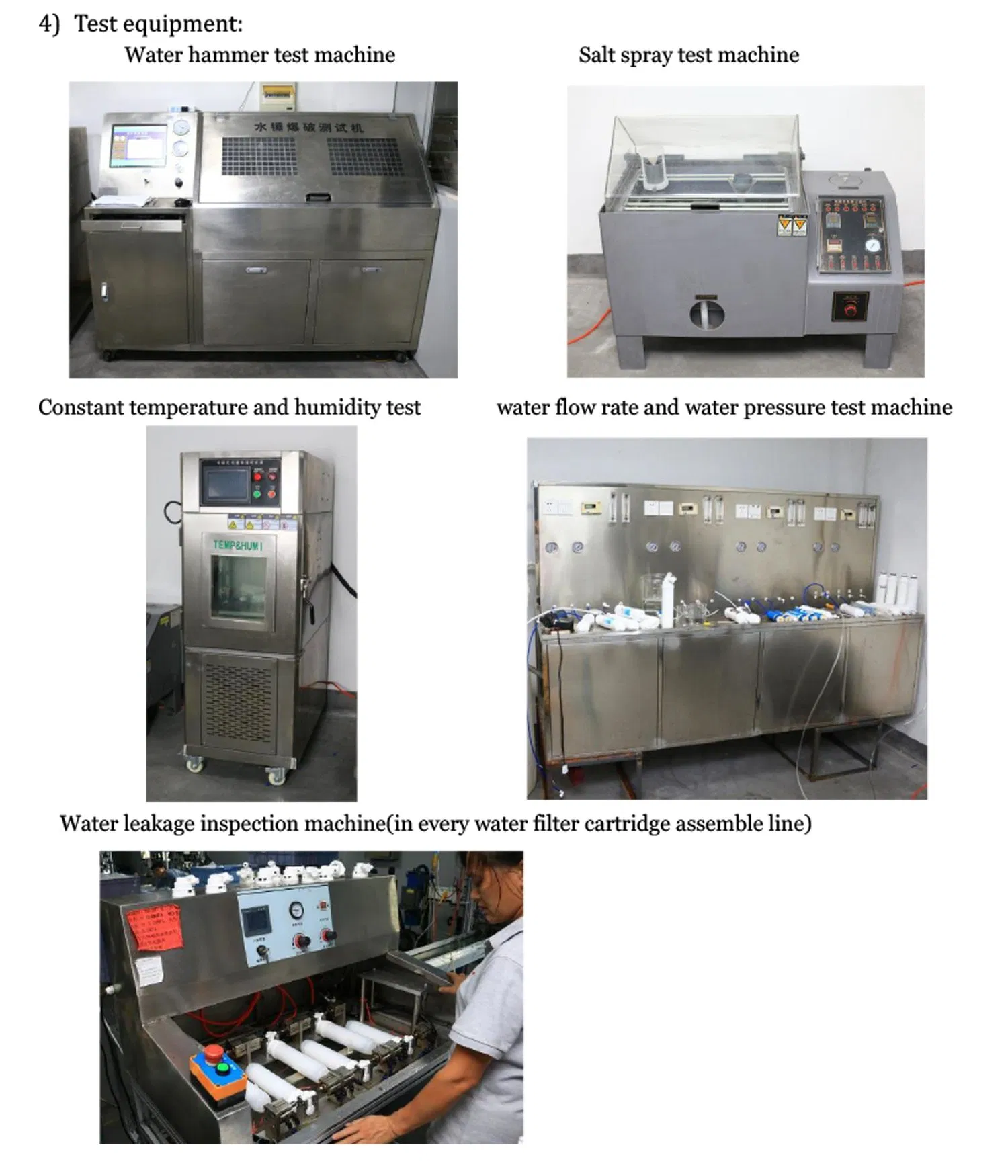
China manufactures over 60% of the world’s water filter cartridges, and the Ningbo-Cixi corridor in Zhejiang Province is the single largest concentration of water filtration factories globally. Here is a step-by-step approach to sourcing:
Step 1: Qualify the Manufacturer
Before requesting quotes, verify:
- Certifications: NSF/ANSI 42/53, ISO 9001, FDA registration (for US market)
- Export history: Minimum 5 years exporting to regulated markets (US, EU, Australia)
- In-house testing: The factory must have its own testing lab — not rely entirely on third-party labs
- Coffee-specific experience: Ask for samples of existing coffee machine cartridges, not just standard residential filters
For a comprehensive manufacturer evaluation framework, see our complete China sourcing guide.
Step 2: Request Samples and Run Comparative Testing
Order samples from 2-3 shortlisted manufacturers. Test each sample in a genuine Everpure (or equivalent) head for:
- Fit and seal quality (no leaks, smooth quarter-turn engagement)
- Initial flow rate vs. rated flow rate
- Chlorine reduction at 25%, 50%, 75%, and 100% of rated capacity
- Pressure drop at rated flow
Step 3: Negotiate Pricing and MOQ
| Order Volume | Typical Discount | Lead Time |
|---|---|---|
| Trial order (200-500 pcs) | List price | 15-20 days |
| Standard order (1,000-3,000 pcs) | 10-15% off | 20-30 days |
| Volume order (5,000-10,000 pcs) | 20-30% off | 30-45 days |
| Annual contract (20,000+ pcs) | 30-40% off | Scheduled deliveries |
Step 4: Establish Quality Control
For ongoing production, implement:
- Pre-production sample approval for every production run
- In-line inspection at 30% and 80% completion
- Final random inspection (AQL 2.5 for critical defects, AQL 4.0 for major)
- Carbon COA from the activated carbon supplier for each batch
- Pressure and flow testing on statistical sample from each production batch
Manufacturer Spotlight: Ningbo XZH Environmental Technology
Located in Cixi, Zhejiang — the heart of China’s water filtration manufacturing cluster — Ningbo XZH has produced OEM water filter cartridges for 15+ years, exporting to 50+ countries. The factory specializes in:
- Everpure-compatible bayonet cartridges (MC2, 4FC, H-300, 2FC equivalents)
- Quick-connect inline cartridges for coffee, ice, and beverage equipment
- CTO carbon block cartridges with coconut shell carbon (iodine value 1,050+ mg/g)
- Private-label packaging with custom branding, barcoding, and multilingual labeling
Coffee-specific capabilities: The factory produces cartridges with integrated polyphosphate scale inhibition for espresso and coffee machine applications, tested to Everpure-equivalent specifications for flow rate, pressure drop, and chlorine reduction.
MOQ starts at 500 pieces for standard configurations. Request a quote or download the full product catalog.
Private-Label Coffee Machine Water Filters: Building Your Own Brand
For distributors and equipment dealers, private-label coffee machine water filters represent one of the highest-margin recurring revenue opportunities in the foodservice equipment business.
The Economics
| Component | Branded (Everpure) | Private Label (OEM) |
|---|---|---|
| Cartridge cost | $45-$90 (distributor) | $25-$50 (FOB) |
| Your sell price | $85-$180 | $65-$120 |
| Gross margin | 47-50% | 58-62% |
| Customer lock-in | Low (commodity) | High (your brand) |
What You Need from the Manufacturer
- Custom housing color and branding — logo, part number, flow direction, capacity rating printed or labeled
- Custom packaging — retail box or poly bag with your branding, UPC/EAN barcode, multilingual instructions
- Performance data sheet — chlorine reduction test results, flow rate curves, pressure drop data under your brand
- Regulatory compliance — NSF listing under your brand name (additional cost, 3-6 months), or manufacturer’s NSF water filter certification covering the product
For guidance on evaluating Chinese manufacturers for private-label programs, see our top water filter manufacturers in China ranking.
Replacement Schedule: When to Change Coffee Machine Water Filters
Even the best filter cartridge has a finite service life. Replace based on the earlier of rated gallon capacity or calendar interval:
| Daily Volume | 2,500 gal Cartridge | 6,000 gal Cartridge | 9,000 gal Cartridge |
|---|---|---|---|
| 100 cups/day (~7 gal) | 12 months+ | 12 months+ | 12 months+ |
| 200 cups/day (~14 gal) | 6 months | 12 months+ | 12 months+ |
| 300 cups/day (~20 gal) | 4 months | 10 months | 12 months+ |
| 500 cups/day (~35 gal) | 2.5 months | 6 months | 9 months |
Rule of thumb: Replace every 6 months even if capacity is not exhausted — carbon block effectiveness degrades with time due to bacterial colonization and media compaction, regardless of volume processed.
Install a mechanical flow meter on the inlet line for high-volume locations. Calendar-based scheduling works for small cafes, but high-volume operations need usage-based tracking to avoid either premature changes (wasted cartridges) or overdue changes (degraded water quality and equipment damage).
For a complete guide to filter replacement scheduling, see our article on commercial coffee machine water filter selection and replacement.
The Bottom Line: Best Coffee Machine Water Filters for Every Operator
| Operator Type | Best Filter Type | Best Platform | OEM Opportunity |
|---|---|---|---|
| Single cafe | Carbon block + scale inhibitor | Everpure MC2/4FC | Buy OEM-compatible, save 30-50% |
| Multi-location chain | High-capacity carbon block | Everpure H-300/7FC | Private-label program, $5K-20K annual savings |
| Specialty roaster | Partial RO + mineral blending | Custom system | OEM all components |
| Equipment distributor | Full cartridge range | Everpure-compatible | Private-label brand, 60%+ margins |
| Foodservice dealer | Standard carbon block range | Everpure + 3M | Stock OEM for Everpure, branded for 3M |
The best coffee machine water filter is the one that matches your water source, your volume, and your cost structure — then gets changed on schedule. For operators and distributors sourcing these cartridges, OEM manufacturing from certified Chinese factories delivers equivalent performance at 30-50% less cost, with full private-label capability for brand builders.
Ready to source? Browse our commercial coffee machine water filter catalog, explore the full quick-connect inline water filter range, or learn about our OEM water filter manufacturing capabilities. Contact Ningbo XZH for samples and factory-direct pricing on coffee machine water filter cartridges.
Related Guides
- Everpure 4FC Replacement Cartridge: High-Capacity Water Filter Guide
- Everpure MC2 Replacement Cartridge: Dual-Stage Sediment + Carbon Guide
- Commercial Coffee Machine Water Filter
- Coffee Machine Water Filters
- Everpure Water Filter Replacement Schedule
- Browse coffee machine water filters
- Browse Everpure-compatible filter cartridges
Frequently Asked Questions
- What are the best water filters for commercial coffee machines?
- The best commercial coffee machine water filters use coconut-shell activated carbon block media rated at 0.5-1.0 micron with integrated scale inhibition (polyphosphate or siliphos). For Everpure-type bayonet systems — the most widely installed platform — top-performing cartridges include the 4FC (6,000 gal), MC2 (2,500 gal), and H-300 (9,000 gal) models and their OEM-compatible equivalents. The ideal filter removes 99%+ of chlorine, reduces sediment to below 5 microns, and includes scale inhibitor to protect espresso boilers operating at 92-96 degrees Celsius.
- Can OEM water filters match the performance of branded Everpure or 3M cartridges?
- Yes, when sourced from ISO 9001-certified manufacturers using identical materials and processes. OEM-compatible cartridges from established Chinese factories use the same coconut-shell carbon block media (iodine value 1,050+ mg/g), NSF-certified housing materials, and precision-manufactured bayonet interfaces. Independent lab testing confirms equivalent chlorine reduction (99%+), sediment removal, and flow rates. The key is selecting a manufacturer with NSF/ANSI 42 and 53 certifications, in-house testing facilities, and proven export history to regulated markets.
- How much can I save by switching to OEM coffee machine water filters?
- OEM-compatible cartridges typically cost 30-50% less than branded originals at equivalent performance. A single cafe replacing two cartridges per year saves $60-120 annually. For chain operators with 50 locations, annual savings reach $6,000-12,000. A 200-location franchise network saves $24,000-48,000 per year — enough to fund a complete private-label cartridge program with custom branding, packaging, and dedicated SKUs.
- What certifications should an OEM coffee machine water filter manufacturer have?
- Essential certifications include NSF/ANSI 42 (chlorine taste and odor reduction), NSF/ANSI 53 (health contaminants including lead and cysts), ISO 9001 (quality management), and FDA registration for US market access. Additional certifications that demonstrate manufacturing quality include WQA Gold Seal, CE marking for European markets, and HACCP for foodservice applications. The manufacturer should also have an in-house testing laboratory capable of running NSF-protocol challenge tests.
- What is the minimum order quantity for OEM coffee machine water filters from China?
- MOQ varies by manufacturer and customization level. Standard OEM cartridges with the buyer's label on existing molds typically start at 500-1,000 pieces per SKU. Fully custom cartridges with unique housing dimensions, custom carbon blends, or proprietary connection interfaces require higher MOQs of 3,000-5,000 pieces due to tooling costs. Many manufacturers offer trial orders of 200-500 pieces at slightly higher per-unit pricing for new customers to validate quality before committing to production volumes.
Looking for OEM Water Filter Cartridges?
Get a factory-direct quote from Ningbo XZH — 15+ years OEM experience, 50+ export markets, MOQ from 500 pcs.
Get a Free Quote →Get Our Full Product Catalog
100+ SKUs with specs, MOQ, and factory-direct wholesale pricing — everything covered in this article and more.